
Imagining the city of the future
Multi-stakeholder workshop that turned four school research projects on the ecological transition of Pontevedra into ten proposals.
2024
Brief description of the action
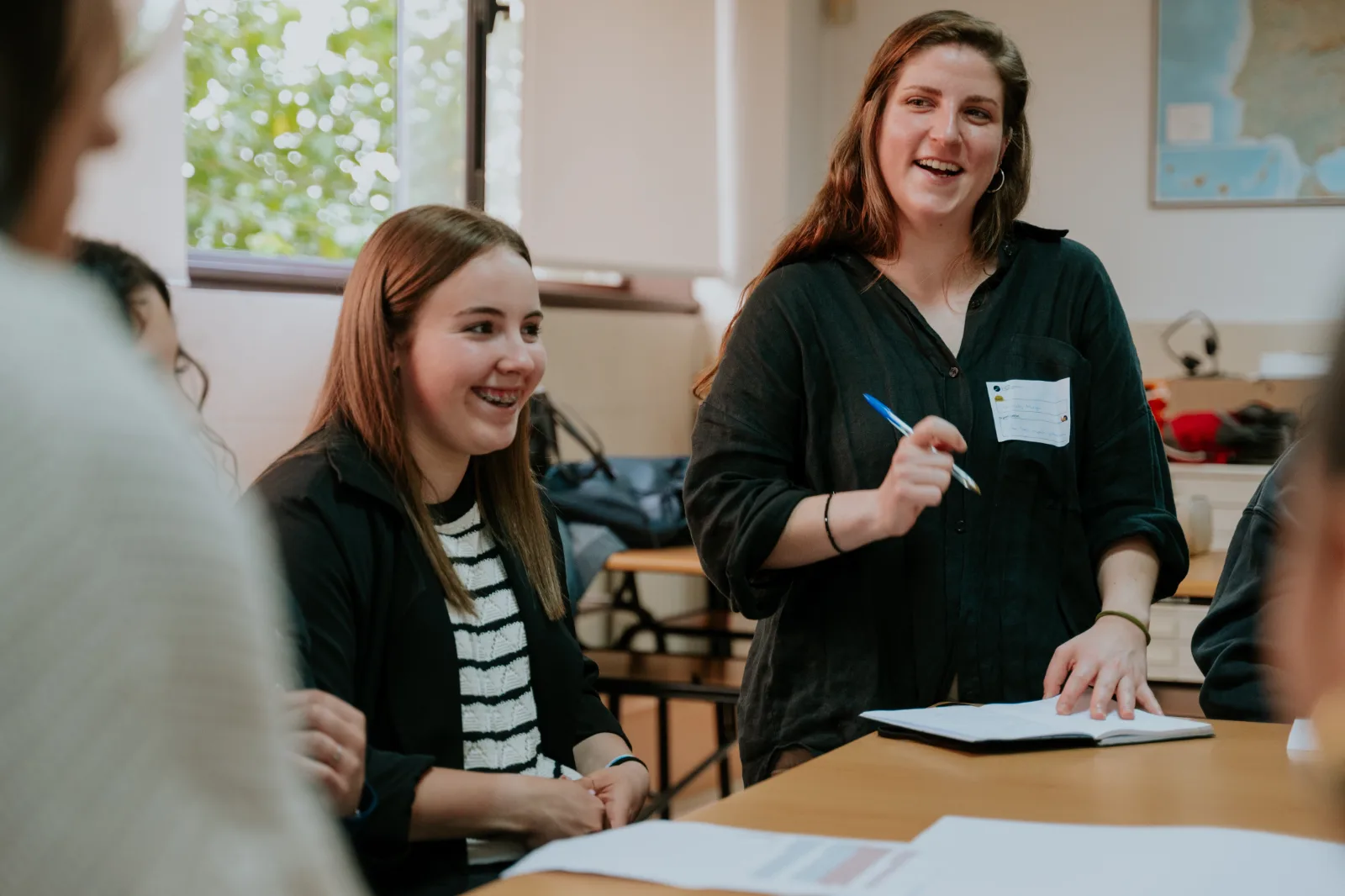
Imagining the city of the future was the multi-stakeholder workshop that closed the citizen science process of Postgrowth S.A.: Pontevedra. It was held on 18 June 2024 in the cartography laboratory of the School of Forestry Engineering, Pontevedra Campus of the Universidade de Vigo, during the international conference ESEE2024.
During the 2023-2024 school year, 230 students from five schools had investigated four cases on the ecological transition of Pontevedra through 90 interviews. The workshop placed that research in the hands of 19 people with very different profiles so that they could compare it and turn it into proposals.
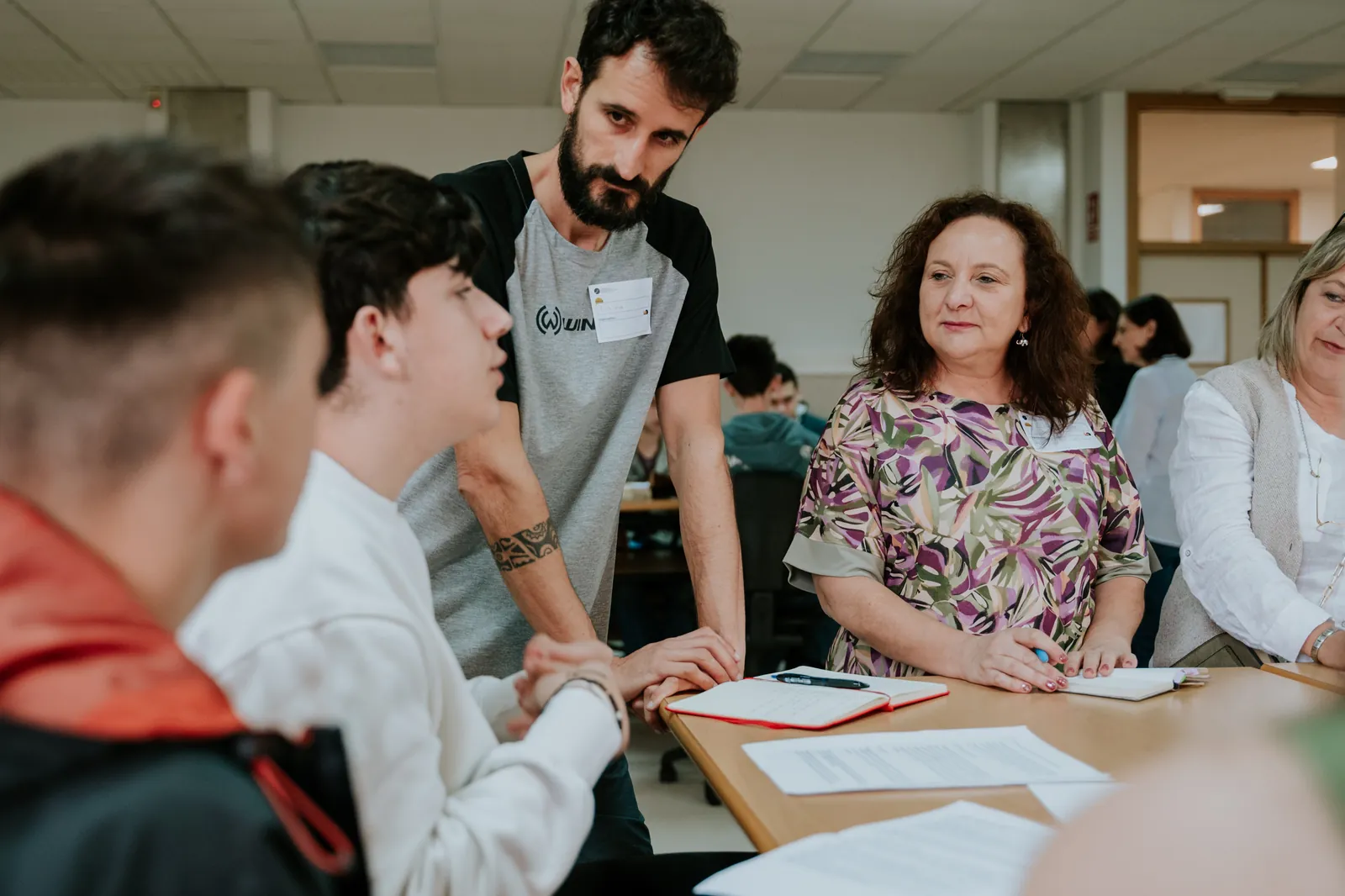
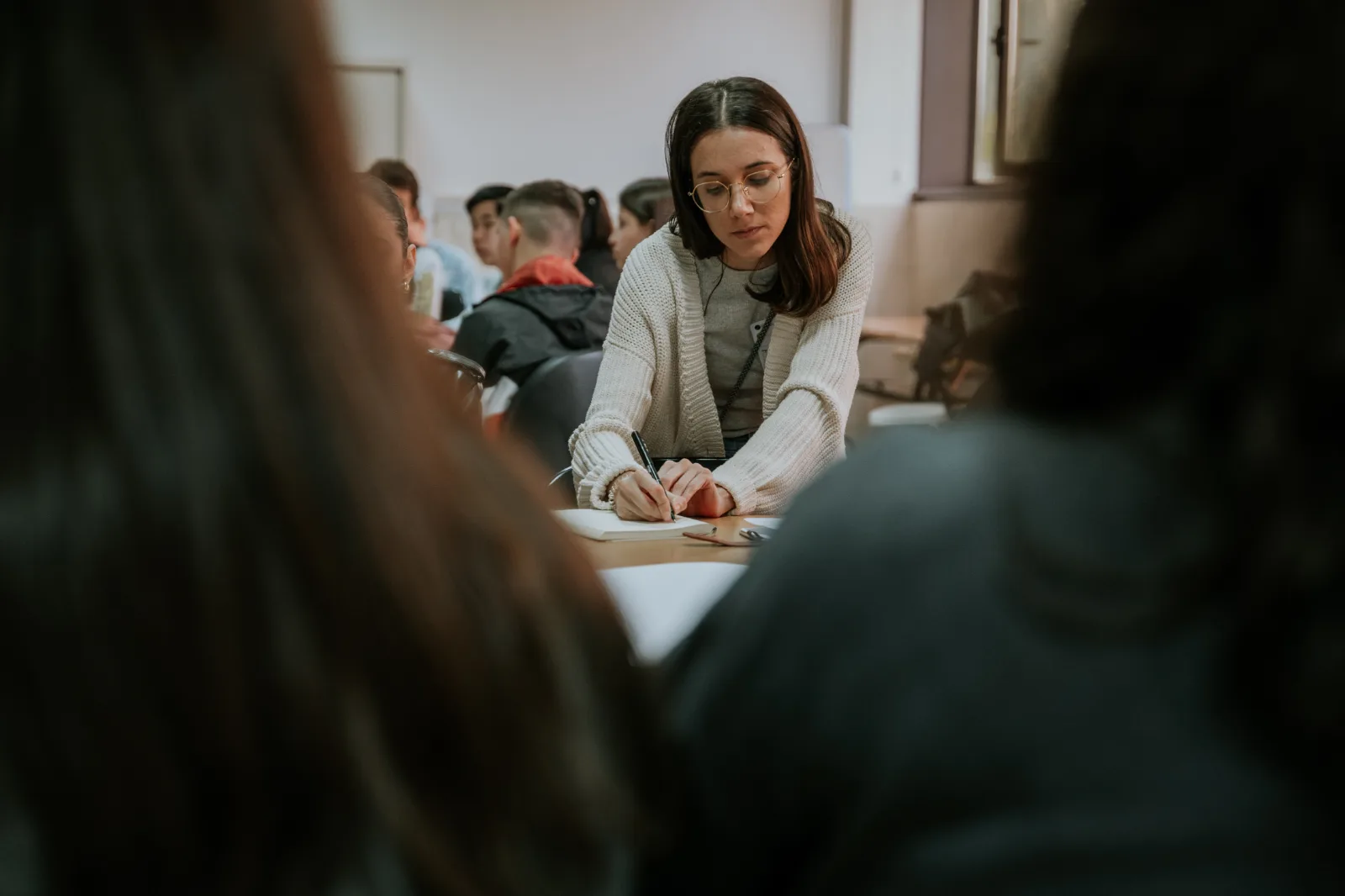
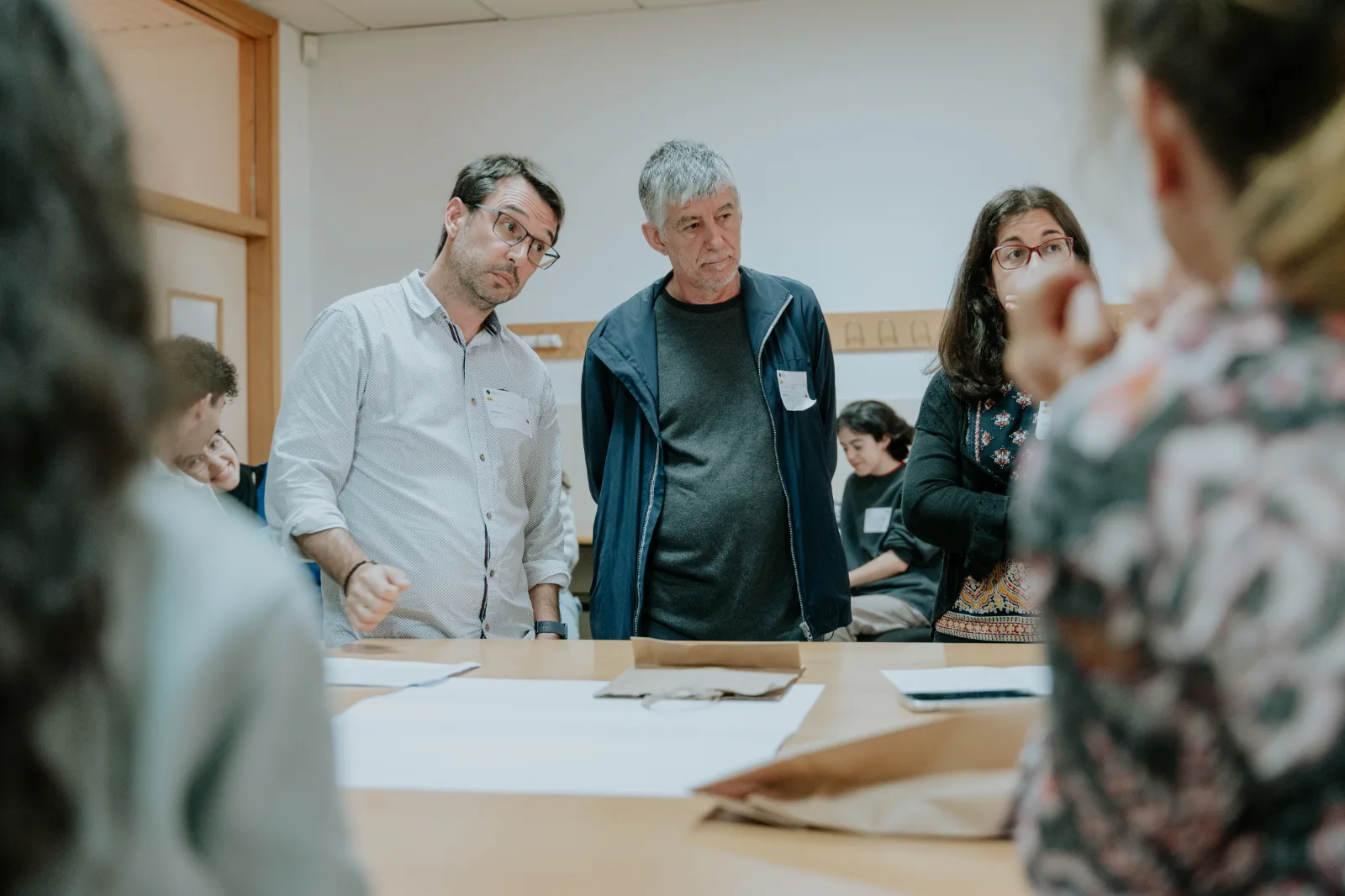
The workshop combined two activities in a morning of three and a half hours. In the first, a speed dating rotation, participants moved in small groups through four stations where the students of each case explained their research. In the second, a focus group, the same people put forward ideas on five challenges and arranged them in time along a line between 2024 and 2034.
The ideas were later organised into ten cross-cutting proposals, published in a policy agenda and in a social recommendations guide. Both documents were sent to Pontevedra City Council and to 21 municipalities in the metropolitan area.
Context and objectives
Postgrowth S.A.: Pontevedra was a social science citizen science project on the role of innovation in the ecological transition of Pontevedra. Throughout the 2023-2024 school year, the students identified 467 challenges, chose four case studies, designed and conducted 90 interviews and analysed the results with the Post-Growth Innovation Lab team.
Each case produced valuable conclusions on its own, but environmental and social challenges are connected and are usually addressed in isolation. The workshop was designed to take that step: its purpose was to compare the four cases, identify what they had in common and turn the findings into clear proposals for public debate and decision-making, with the students in a leading role.
It was the last activity of the participatory process and the one that connected school research with people working in politics, research, teaching, technical fields, entrepreneurship and neighbourhood life. The cases were water pollution, the decline of rural areas, mental health and green spaces, and employment in Pontevedra.
The workshop had four objectives. It sought to compare the four studies by the students and identify common patterns, and to turn the findings into clear and practical proposals for public debate. It also aimed to give young people a meaningful role in a conversation with professional and institutional actors, and to enrich the research by the students with the professional, institutional and local knowledge of the participants.
Organising, supporting and funding entities
The workshop was organised by the Post-Growth Innovation Lab of the Universidade de Vigo, within the project Postgrowth S.A.: Pontevedra (FCT-21-18266). It had the institutional support of Pontevedra City Council and was funded by the Spanish Foundation for Science and Technology (FECYT).
The Post-Growth Innovation Lab team designed the methodology, prepared the students, selected the profiles, organised the materials and the space and moderated the activities. The students had two roles: in the first part they explained their case at their own station, and in the second part some students took what came out of each working table to a central table. The participants contributed their experience, asked questions, made proposals and ordered ideas.
The research brought to the workshop was the work of the students and teachers of IES Luís Seoane, IES Frei Martín Sarmiento, IES Sánchez Cantón, IES Valle-Inclán and Colegio Los Sauces, who brought a whole school year of research to the workshop. The families made the students' participation possible.
The methodological report was written by Brais Suárez Eiroa and Cristina Míguez González, members of the Post-Growth Innovation Lab. Their work was funded, respectively, by the postdoctoral programme of the Xunta de Galicia under contract ED481B-2023-011 and by FECYT.
Participant recruitment and selection
The workshop brought together 19 participants with diverse profiles: policymakers, researchers, teachers, technical staff, entrepreneurs and members of the public. Students from the four case studies and the five schools also took part, in varying numbers depending on the school.
The selection of participants sought a diversity of perspectives, without aiming for statistical representativeness. The groups were also formed to mix profiles, so that different viewpoints coexisted at each table.
The workshop was prepared in the final weeks of the process. The students of each case prepared a short explanation of context, method, results and open questions. Participants received an invitation with the organisation of the day and a brief description of the workshop, deliberately concise so as not to influence the results.
The team also prepared the panels for each challenge with a timeline between 2024 and 2034, the sticky notes and the support material. The workshop was held on the Pontevedra campus during the international conference ESEE2024, at which the students also gave 28 presentations, and attendees received a certificate of participation in the conference.
Methods and tools
The design started from a simple idea: before deliberating, everyone needs a shared understanding of the evidence, so the workshop began by getting to know the cases from those who had researched them. The second principle was to work in small groups, with a mechanism that connected what happened in each group. The third was to use visual tools, such as sticky notes and panels with a timeline, which offer ways of taking part different from arguing out loud.
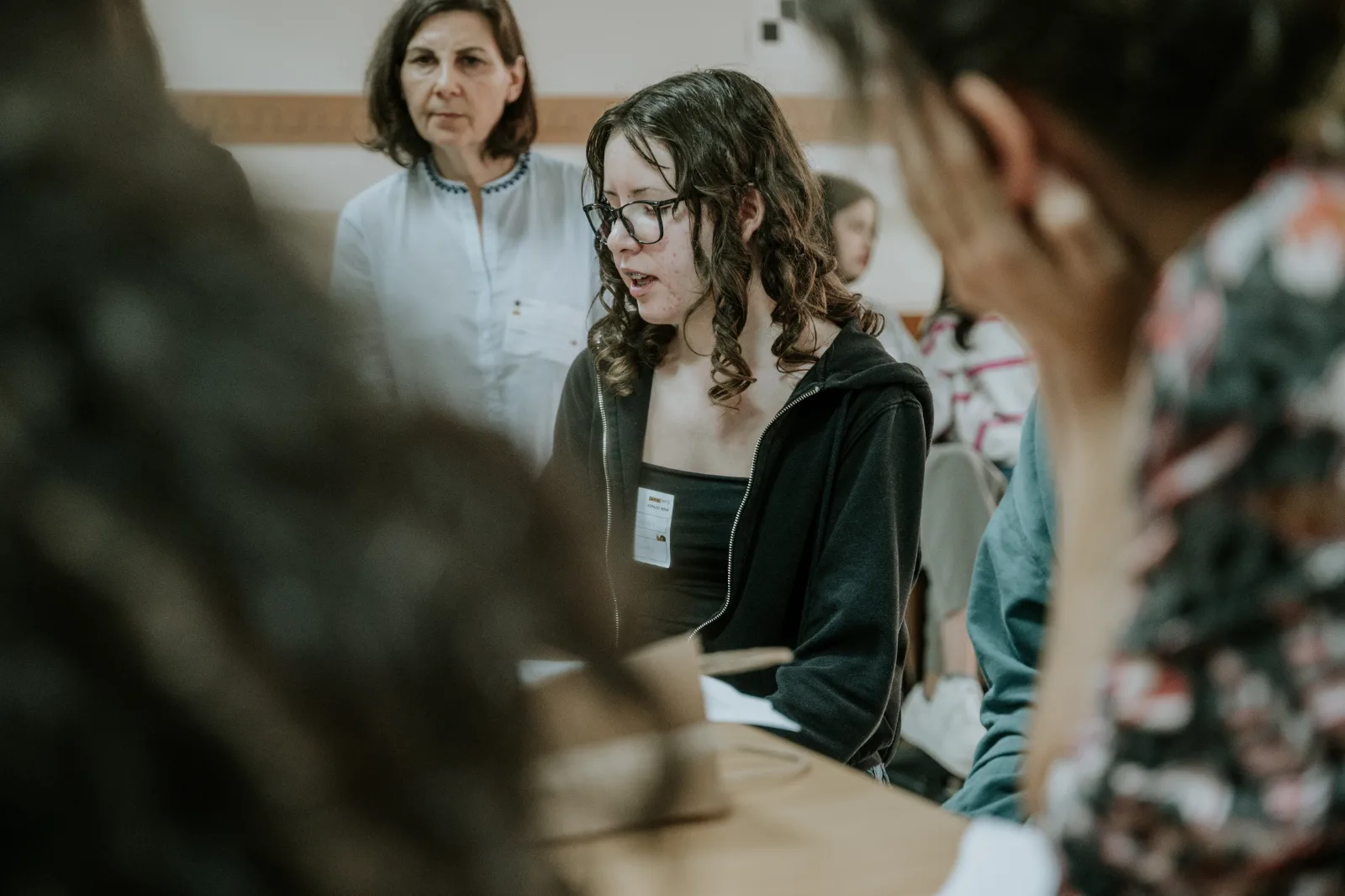
After a welcome of about 15 minutes, part one was a speed dating rotation of just over an hour. Participants were divided into groups of four or five that rotated through four stations, in rounds of about ten minutes, where the students of each case explained the context, the method, the findings and the questions that remained open. Attendees asked questions and contributed their experience, so the exchange went both ways.
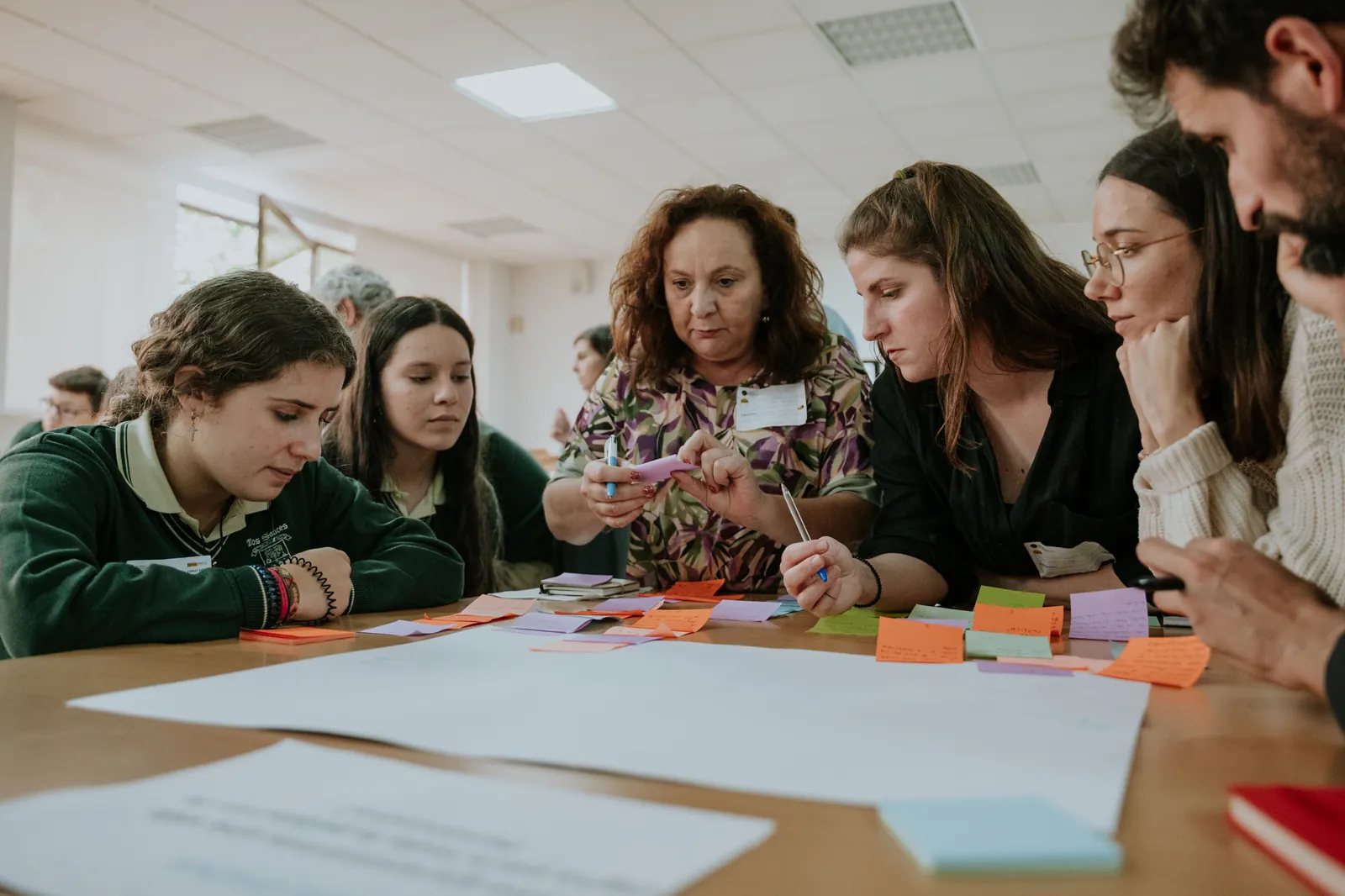
After a 30-minute break, part two was a 90-minute focus group. First, each person wrote ideas for improvement or solutions on sticky notes, which allowed ideas from people who spoke little in plenary to enter the conversation. Participants were then redistributed into groups assigned to five challenges formulated as open questions: employment, green spaces, rural areas, water and, as a cross-cutting challenge, a decent life. Each group arranged the ideas along a timeline between 2024 and 2034, added those that were missing and removed those that were not convincing.
While the groups were working, some students took what came out of each table to a central table, where students and professional staff pooled those ideas and tried to group them into categories in real time. This mechanism made it possible to see which ideas appeared in several challenges at once. In the final part, some of these cross-cutting ideas were discussed in plenary, and after the workshop the professional team grouped them into ten proposals.
The workshop applied the ethical requirements of the rest of the project, which follow the protocol of the Ethics Committee for Research with Human Beings and the Environment (CEISHMA) of the Universidade de Vigo and data protection law. Participation was voluntary, adult participants and each student, together with their family or guardian, signed the informed consent and the image authorisation, and proposals were recorded without attributing them to specific people.
Outcomes
The team organised the ideas from the workshop into ten cross-cutting proposals: from private benefit to collective benefit, quality public guarantees, quality public services, public participation, community life, community spaces, limits to ecological and social impact, sustainable local initiatives, interconnectivity and resilience, and communication and education. Their guiding principle is to prioritise collective benefit over private interests.
The proposals rest on specific ideas drawn from the tables and from the case studies. They include free drinking water points in the municipality, mental health care integrated into support networks, neighbourhood agreements on waste, plastics and mobility, and alliances between local producers and restaurants.
The comparison between cases also showed that the transition of Pontevedra goes beyond urban planning, because it involves the management of natural resources, social justice, community networks and coordination between institutions, businesses and community groups. The proposals combined technological measures, such as sensors to monitor water quality, with social measures, such as the shared use of abandoned land to produce more local food.
Taken together, the proposals broadened the view of the transition of Pontevedra. The sustainability model of the municipality, internationally recognised, has focused its efforts on the compact city, and the proposals also included the rural parishes that surround it and the relationships that link both spaces.
The main outputs were a policy agenda for a just ecological transition in the municipality of Pontevedra, published in September 2024, and a social recommendations guide with practical guidelines for the public, written in more accessible language. The action also has a public record on the website of TIAS lab, the public participation living lab of the Universidade de Vigo.
Impacts
The agenda and the guide were sent to Pontevedra City Council and to 21 municipalities in the metropolitan area, compared with the 9 planned in the project. This distribution broadened the reach of the proposals beyond what had been planned.
The workshop closed the citizen science process of Postgrowth S.A.: Pontevedra and connected a whole school year of research with people working in politics, research, teaching, technical fields, entrepreneurship and neighbourhood life. It offered a direct dialogue between young people and people from politics, research, education, business and civil society.
Participants learned about findings and concerns arising from research led by young people, and the students explained and defended their work before an adult and expert audience. The comparison between cases helped to go beyond sectoral solutions and to recognise shared causes, tensions and needs.
The reach also had limits. The documents reached 21 municipalities without any mechanism to know what was done with them. As the report notes, sending proposals to many municipalities broadens the reach but does not ensure any use.
Lessons learned
The workshop worked as a space for meeting and comparison. Speed dating gave everyone a common basis before proposing, the small groups made participation easier and the central table prevented each table from being isolated, which made it possible to move from four cases to common ideas in a single morning.
The main weakness lay in the move from the workshop to the document. The material from the tables was not recorded systematically, so it is not possible to know how many ideas came out or how they were distributed across challenges and years. The agenda was drafted afterwards by the team and turned out to be a general text, with little traceability back to the specific ideas from the tables and without the time ordering between 2024 and 2034 that was worked on at them.
The report draws six methodological lessons. Sharing the evidence before deliberating puts everyone in a position to compare, and small groups need a connecting mechanism such as the mixed central table, whose coordinator should have a template to record the categories as they emerge. What is not recorded is lost, so each panel should be photographed, the notes transcribed at the end and the time ordering kept as part of the result.
The final document must preserve the voice of the workshop: it should be built from the recorded material, link each proposal to the specific ideas and their time horizon, and be returned as a draft to the participants before publication. Multi-stakeholder does not mean balanced, so groups should be balanced taking into account knowledge, interests and influence, and moderated so that the most authoritative voices do not close the discussion. Handing results to institutions also requires follow-up, with a commitment to respond and a moment for review agreed before the workshop.
To replicate the workshop, the report recommends keeping the sequence of speed dating, brainstorming, time ordering by challenge and central table. It also recommends designing the recording of the material from the outset, drafting the proposals from that material and validating them with the participants, and agreeing a response mechanism with the institutions before handing over the results.