
Postgrowth S.A.: Pontevedra
Citizen science project in which 230 secondary students from five Pontevedra schools researched the role of innovation in the ecological transition.
2023–2024
Brief description of the action
Postgrowth S.A.: Pontevedra was the first project in the Postgrowth S.A. series and a citizen science project in the social sciences. Its scientific aim was to generate knowledge about the role of innovation in the ecological transition of Pontevedra and its surrounding area. The acronym S.A. stands for Social Actions and underlines the practical orientation of the project.
The project was coordinated by the Post-Growth Innovation Lab at the Universidade de Vigo, with funding from the Spanish Foundation for Science and Technology (FECYT) and the collaboration of Pontevedra City Council. It ran from 1 July 2023 to 30 November 2024, and its core participatory process took place between October 2023 and June 2024.
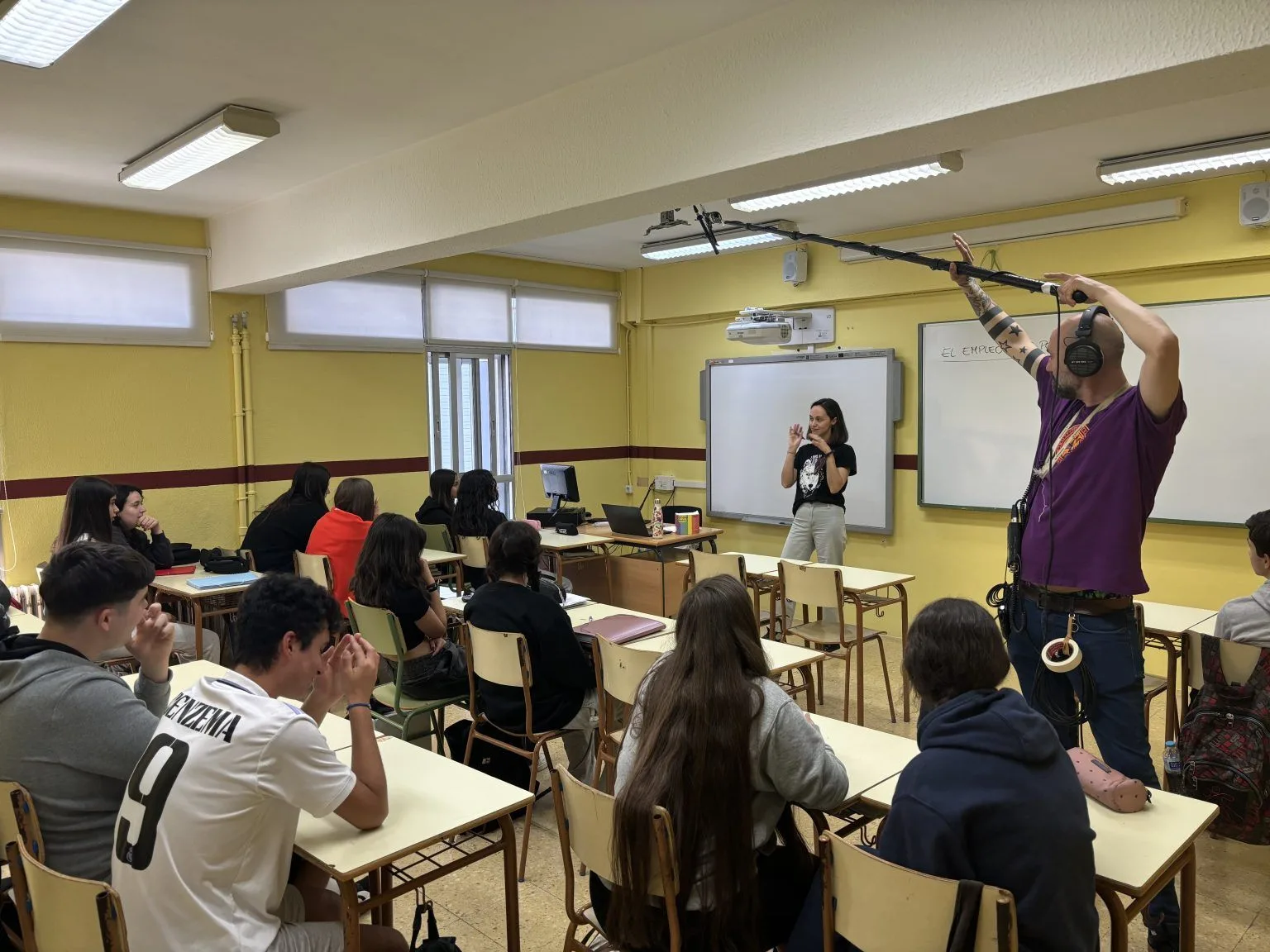
Lower and upper secondary students and their teachers were part of the research team. Five schools in the municipality took part, together with 230 students, more than 20 teachers and a network of at least 20 organisations. They took part in identifying problems, choosing the topics, designing the interviews, carrying out the fieldwork, discussing the results and presenting them in public.
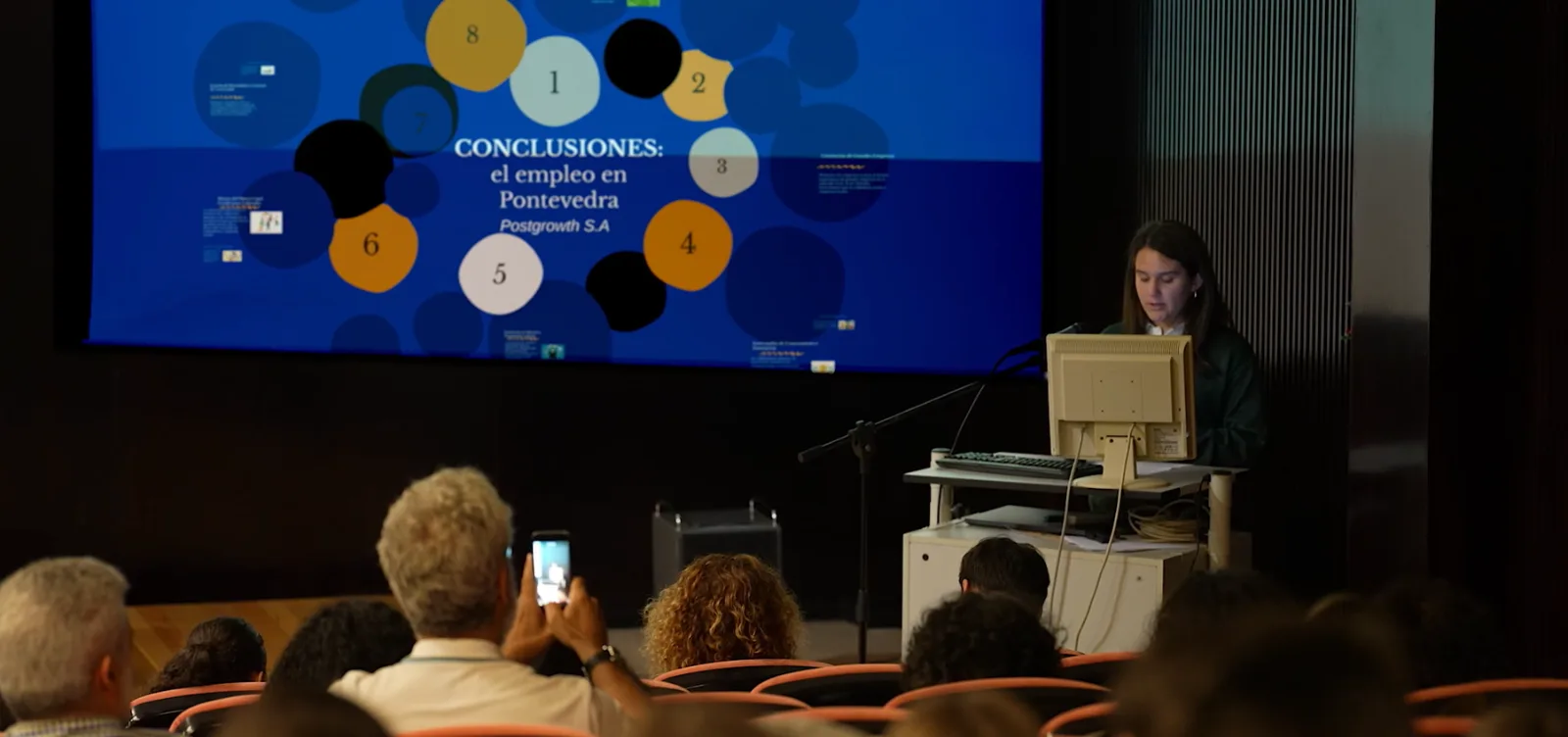
The process was organised into fifteen linked activities, with 55 in-person sessions of 50 minutes in 11 groups. Students identified 467 challenges, worked on four case studies and conducted 90 semi-structured interviews. The results reached the public through a multi-sector focus group, 28 student presentations at the international conference ESEE2024 and a policy agenda sent to 21 municipalities in the Pontevedra area.
Context and objectives
The project started from a simple and demanding idea. Major ecological challenges require expert knowledge and technology, and they also require an understanding of how people experience these problems, what priorities they identify, what conflicts they perceive and what changes they consider fair and feasible. For this reason the project organised a process of shared knowledge production in which citizens take part in several phases of the research.
Pontevedra offered a particularly suitable context. It is a municipality with visible public debates on mobility, urban space, water, links with the countryside and forms of economic development, and with an internationally recognised urban model. The project could also build on an earlier collaboration between the Universidade de Vigo, Pontevedra City Council and IES Luís Seoane, which predated the application to FECYT.
Working with lower and upper secondary students reflected a logic of intergenerational justice. The transitions being discussed today will directly affect those who are now of school age, and their involvement was consistent with the kind of problems addressed.
The project had four objectives. The first was to immerse lower and upper secondary students (ESO and Bachillerato) in a real process of social research and citizen science, and the second to generate knowledge about the role of innovation in the ecological transition, with a territorial and action-oriented approach. The third was to document and analyse the process itself to identify what works and what should be improved in future citizen science experiences, and the fourth to channel the demands and visions of young people into public spaces for discussion and knowledge transfer.
Organising, supporting and funding entities
Overall coordination was the responsibility of the Post-Growth Innovation Lab at the Universidade de Vigo, the beneficiary organisation, and the main partner organisation was Pontevedra City Council. The professional team defined the methodological framework, produced the materials, ensured ethical and legal compliance, supported the schools in every session, carried out the first qualitative analysis and coordinated the cross-case comparison and knowledge transfer. One person hired with FECYT funds worked exclusively on the project.
Teachers acted as an essential link. They helped integrate the project into the classroom, adapted timing and needs to each group, supported students day to day and served as the link with the university coordination. Students played an active role in almost every phase, and citizens and local experts took part first as interviewees and then as members of the multi-sector focus group.
The support network brought together the Universidade de Vigo, Pontevedra City Council, the five participating schools, CEIP Curros Enríquez, groups such as Eco-Étika, the Club contra o cambio climático at IES Sánchez Cantón, FEMUPO, Plataforma Salvemos o Rural, PDR Arousa, CIDEL Galicia and Paisaxea, companies and technical organisations such as Trespés, Prisma, Iproma, Eurofins and ViaNai, and the Unidade de Cultura Científica e Innovación of the Universidade de Vigo. These organisations contributed by taking part in the process, in the Espazo Xove at the conference or in dissemination.
The project had a total budget of 89,000 euros. FECYT was asked for 38,000 euros and granted 31,750, and this funding was complemented by substantial in-kind support, such as school and university spaces, internal support from the schools, institutional backing, City Council support for participation in the conference, and the coordination time, materials and equipment provided by the university. School citizen science can be low-cost in material terms, and its cost in time, support and institutional backing is high.
Participant recruitment and selection
The invitation to the secondary schools in the municipality was open and voluntary, and student participation was not linked to academic assessment. Recruitment combined public mailing lists, existing institutional contacts and successive referrals through snowball sampling. The City Council helped build the network of schools and organisations, and the team visited the schools in person to explain the project.
Of the ten schools invited, five joined, and in October 2023 they signed their commitment to take part. The five participating schools were IES Luís Seoane, IES Frei Martín Sarmiento, IES Sánchez Cantón, IES Valle-Inclán and Colegio Los Sauces. Municipal support depended on the people who had championed it, and after the elections of May 2023 it was interrupted while the new government got organised.
In total, 230 lower and upper secondary students, working in 11 groups, and more than 20 teachers took part, compared with the 200 students and 20 teachers planned. The twelve possible cases were put to a vote and the final topics were allocated according to the interest expressed and the size of the groups: IES Luís Seoane worked on clean water, IES Frei Martín Sarmiento on greener cities, IES Sánchez Cantón on a living countryside, and IES Valle-Inclán and Colegio Los Sauces on greener jobs.
Students then found the people to interview. Interviewees included members of the public, public administration staff, teachers, self-employed workers and employees, members of the municipal government, healthcare staff, Navy personnel, and people from the fishing sector and traditional trades. For the focus group, attendance was confirmed for 19 people from different fields: policymakers, researchers, teachers, technical specialists, entrepreneurs and members of the public.
Methods and tools
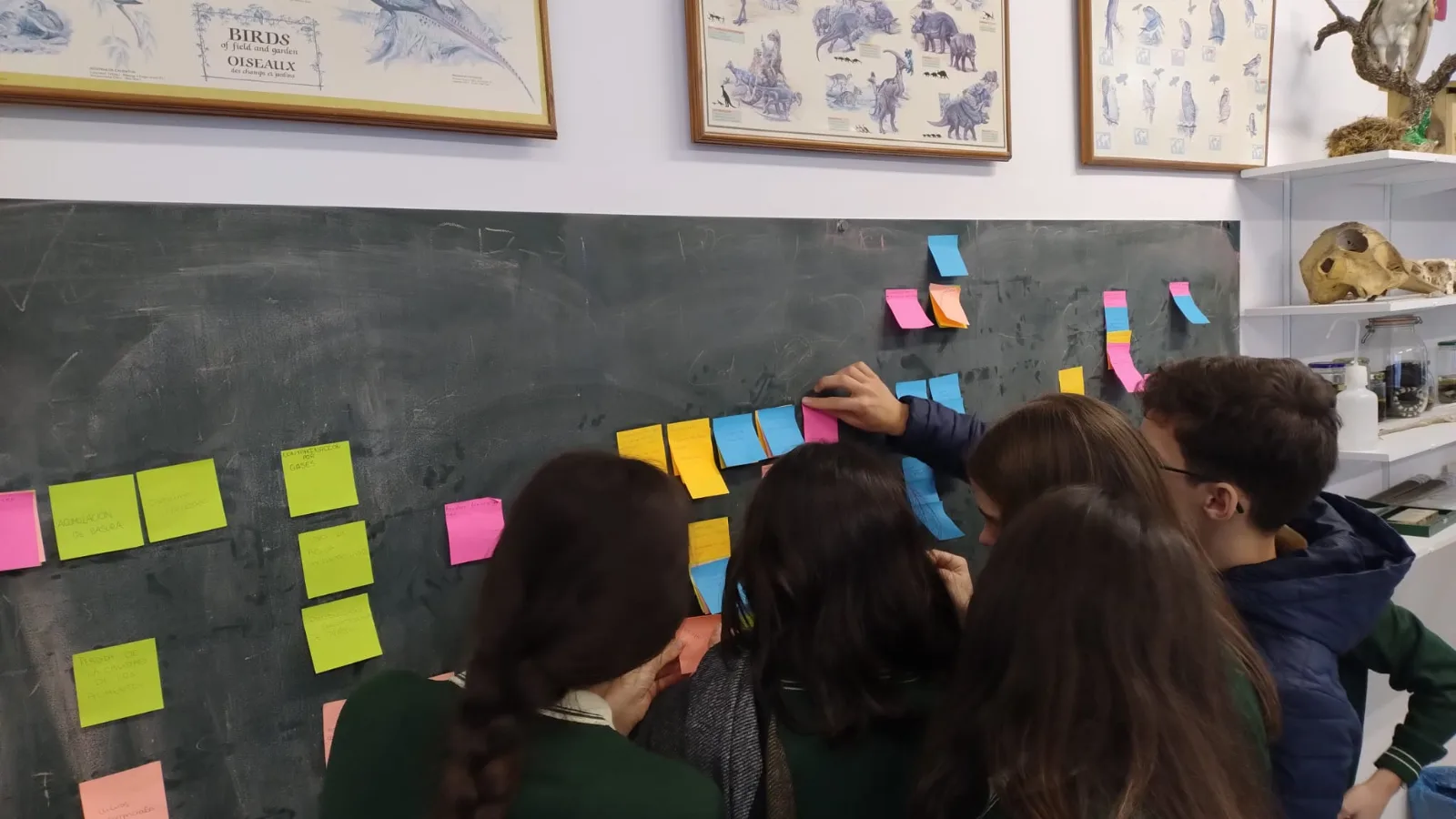
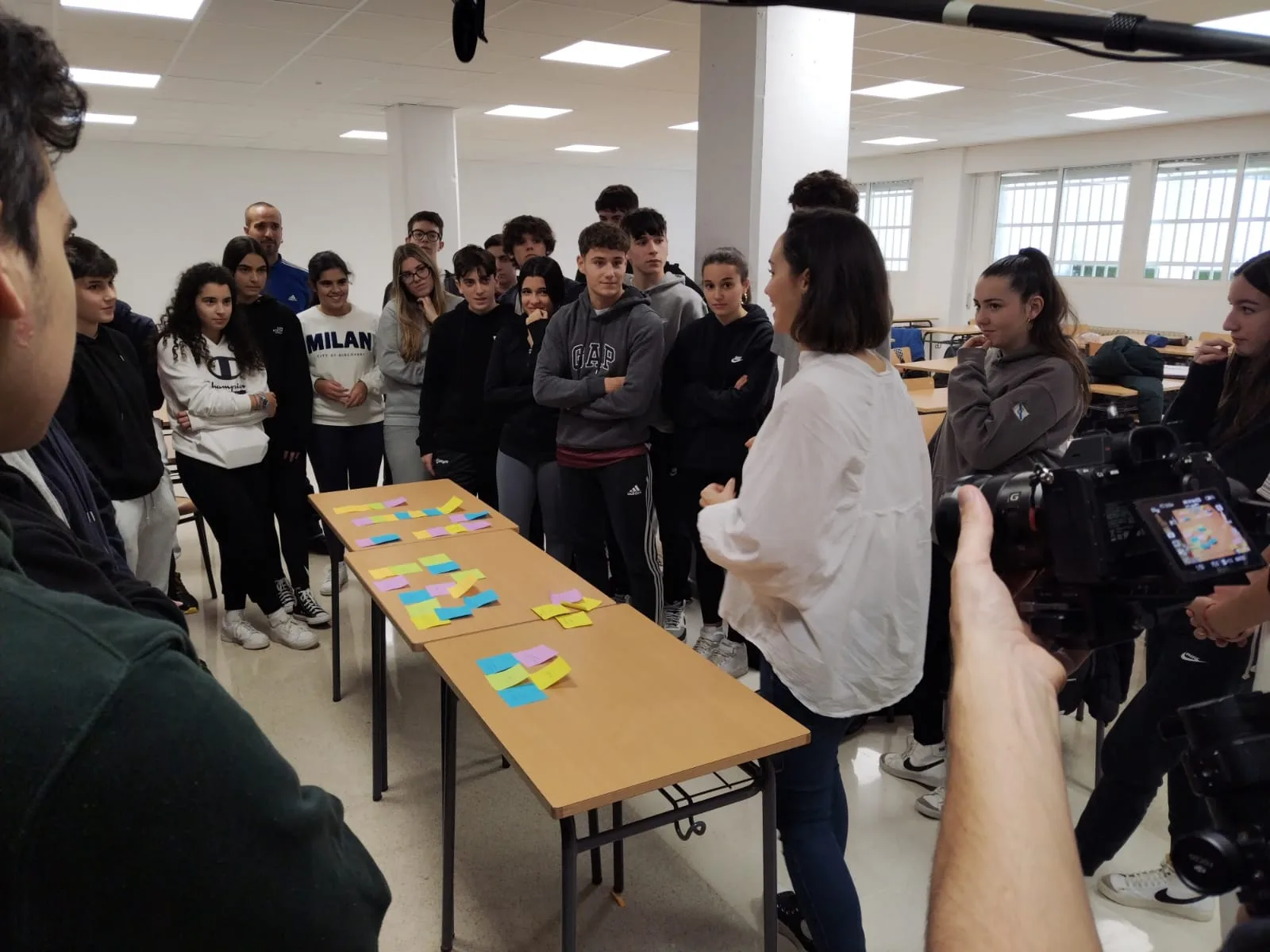
The project was designed as a co-creative citizen science process aimed at generating actionable knowledge. The design was inductive: the process began with the challenges perceived by participants, and neither sustainability nor the cases were defined in advance. It combined qualitative research, participatory activities and arts-based expressive tools, such as visual activities, sticky notes, guided debates and group work.
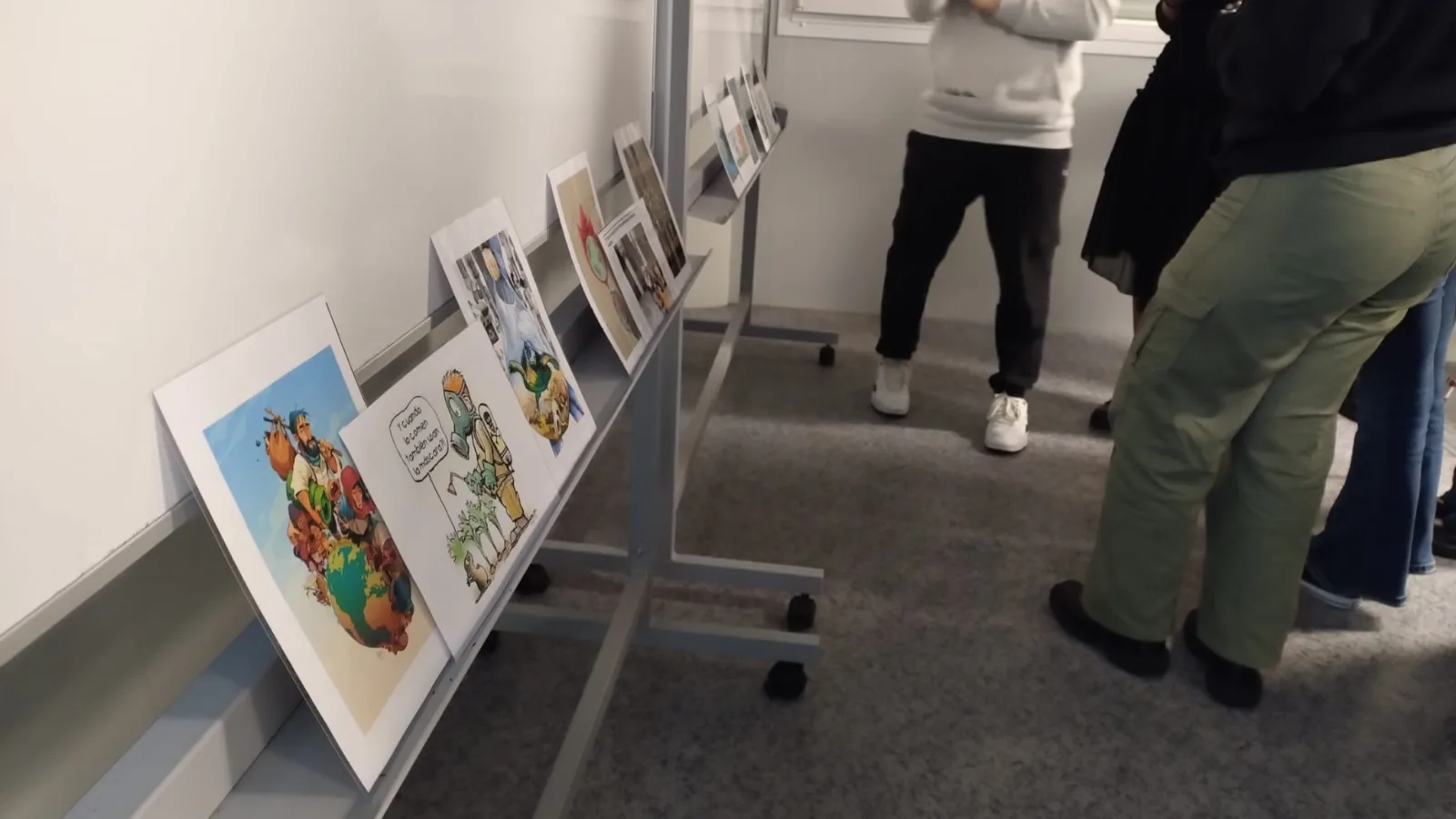
After the launch in July 2023, the first session in October 2023 used images, press cuttings and sticky notes to name local and global challenges. The professional team inductively arranged the 467 challenges into seven areas of action (nature, mobility, health, food, water, housing and energy) and twelve possible case studies. In January 2024 a second session provided research training, and the project opted for semi-structured interviews, practised together with informed consent, confidentiality, anonymisation and the right to withdraw.
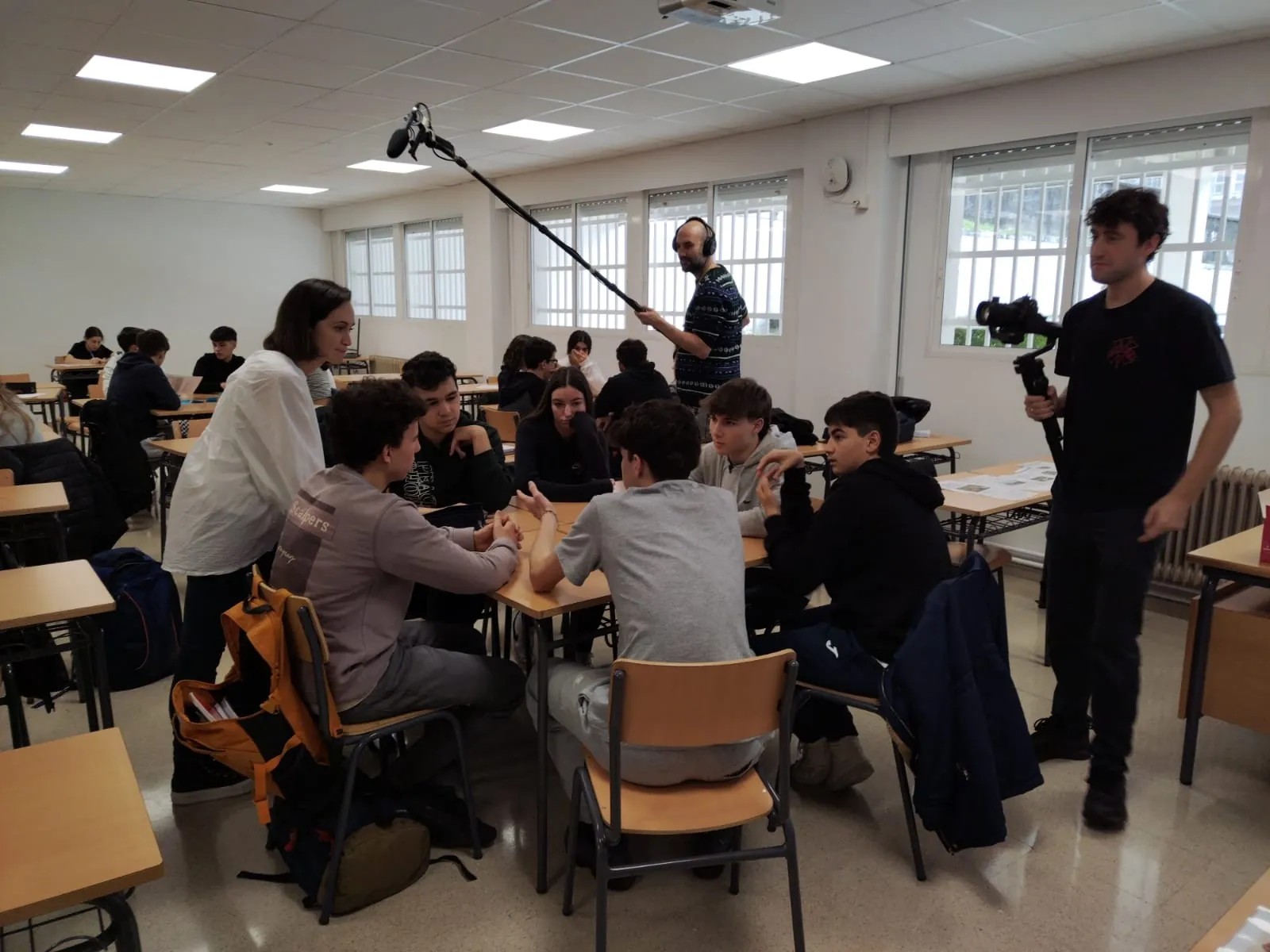
In February 2024 students reviewed draft interview guides for each case and were able to refine, add or rephrase questions. Between March and April 2024 they conducted the interviews in small groups, recorded them with permission, transcribed them in anonymised form and shared them through secure platforms. The professional team then carried out a first round of inductive analysis with NVivo, grouping coded excerpts into themes and main categories for each case.
In May 2024 a fourth session of collective analysis validated, nuanced and extended the initial interpretation through individual reflection, sticky notes and plenary discussion. In early June students prepared short presentations and practised public speaking. On 18 June 2024 the multi-sector focus group compared the cases using a speed dating format, and students gave 28 presentations in four parallel sessions at ESEE2024.
The project met the protocol of the Universidade de Vigo Ethics Committee for Research with Human Beings and the Environment (CEISHMA), the General Data Protection Regulation (GDPR) and Spanish Organic Law 3/2018. Students signed the informed consent with their family or guardian, interviewees signed their consent and authorised the recording, and those who worked with the interviews signed a confidentiality agreement. Transcripts were anonymised, data were stored in the university institutional cloud and primary data were deleted once the analysis was complete.
Quality control was shared. The team prepared instruments and reviewed materials, teachers supported the work in the classroom and students checked the results in group sessions.
Outcomes
The four case studies were the transition towards clean water systems (23 interviews), greener cities (17), a living countryside (13) and greener jobs (37). The water case concluded that water quality is a technical standard and also a matter of health, livelihoods, leisure, ecosystems and territorial justice, and the cities case that green spaces serve functions of socialising, rest and exercise and should be planned inclusively. The countryside case found that caring for rural areas requires valuing their ways of life, improving their material conditions and preventing their environmental degradation, and the employment case that the labour transition must guarantee good-quality local jobs and include the groups who are usually left out.
Water, urban planning, the countryside and employment appeared as connected dimensions of a single territorial transition. Students placed social and territorial factors at the heart of the urban transition, such as the depopulation of rural parishes and the loss of services, and so broadened the view beyond the compact city. The information gathered revealed cross-cutting barriers, such as inaccessible bureaucracy, a lack of coordination between actors, inequalities in access to services and tensions between private profit and collective goods.
The focus group drew up ten cross-cutting proposals to drive several transitions at once in the municipality, which became a policy agenda and a social recommendations guide. They included shifting from private profit to the collective good, robust public guarantees, high-quality public services, in-depth citizen participation, shared community life and community spaces, ecological and social limits, sustainable local initiatives, interconnectivity and resilience, and better communication and education. The recommendations combined technological measures, such as sensors to monitor water quality, with social measures, such as the shared use of abandoned land to produce more local food.
Other outputs were the project website, teaching materials, ethics documentation, the results of the four cases and a documentary following the process, produced by Trespés and published on 2 December 2024. Students presented their work in 28 presentations at ESEE2024 and in an Espazo Xove open to diverse audiences.
Impacts
The evaluation combined ongoing monitoring, with monthly meetings between the overall coordinator and the hired staff member, an activity log and a final survey of teachers and students sent out in June and October 2024. The survey received 51 responses (44 from students and 7 from teachers) from 4 of the 5 schools, an estimated response rate of 21.7%. Of the respondents, 88% had never taken part in a citizen science project before.
The overall rating of the project was 8.47 out of 10, interest in the project 8.67, the coordination 8.82 and impact on society 7.59, with an overall summary average of 8.45. The most highly rated aspects were the closeness of the coordinating team, the clarity of the phases and tasks, the participatory activities, conducting interviews, presenting results at the conference and feeling part of real research.
The open-ended responses show conceptual and methodological learning. Many people mention a better understanding of nearby problems, such as water pollution, the decline of the countryside or the relationship between mental health and green spaces, and having learned how to interview, organise research, select data and prepare a presentation. Several said they paid more attention to their surroundings, although in later conversations with students from the series who took part again these habits had largely given way to the previous ones.
Most planned indicators were met or exceeded: 230 students against 200, 28 presentations against 10, 326 people attending the conference from the schools against 200 and more than 2,000 followers on X against 1,000. The policy agenda and the guide, with ten proposals each, reached 21 municipal governments compared with the 9 planned. The documentary had 298 views as of 20 January 2025, below the 1,000 planned.
Dissemination reached media outlets such as DUVI, Diario de Pontevedra, Pontevedra Viva and La Voz de Galicia, and fairs such as the II Feira da Sostibilidade at IES Luís Seoane, Girls in Science Day at CEIP Curros Enríquez and the Universidade de Vigo sustainability fair. The proposals delivered to the municipalities had no follow-up mechanism of any kind, and there was no way of knowing what was done with them.
Lessons learned
The main lesson is that young people's participation in citizen science can produce rigorous and socially useful knowledge when it is supported by close and stable coordination, a clear and gradual design and genuine spaces for public feedback. The closeness of the coordinating team, present at every session, was the most highly rated aspect, because in projects with teenagers trust allows them to take on responsibilities and dare to speak in public. The step-by-step design and visual formats such as images, sticky notes and speed dating lowered barriers to entry, and the conference and the focus group turned the project into something more than a classroom exercise.
The clearest weakness was the tension between the intensity of the project and the school calendar, with little time to explore the topics in depth and overlap with exams. The volume of interviews left little time to analyse them with the students, so the first analysis fell to the professional team, and transcription proved costly. The cases were also imbalanced, with 13 interviews on the countryside and 37 on employment, and many tasks fell to a very small core coordination team.
The report recommends setting aside time and resources for mediation and support, planning co-creation as part of the curriculum with a calendar that avoids exam periods, and lightening the transcription workload with technical support, a finer division of tasks or partial samples. It also recommends open analysis sessions that show codes, categories and interpretive decisions, and a minimum and a maximum number of interviews per case.
Delivering proposals to an institution does not guarantee their use, so a mechanism for responding to and following up on the proposals should be agreed with the receiving institutions before starting. Evaluation should combine micro-evaluations during the process with a final evaluation during school hours, and coordination should be shared among more people.
The project opened the Postgrowth S.A. series, and its lessons were carried over to the following editions. Postgrowth S.A.: Vigo focused on a single case analysed from five dimensions to reduce the coding workload, and Postgrowth S.A.: Alimentación tested a model based on teacher training. In September 2025 the relationships built from Pontevedra were formalised in the Post-Growth Citizen Science Network of Galicia, which has offered a teacher training course since November 2025.