
Postgrowth S.A.: Vigo
Citizen science project in which 310 secondary students from seven Vigo schools researched offshore wind and a just, sustainable blue economy.
2024–2025
Brief description of the action
Postgrowth S.A.: Vigo was the second edition of the Postgrowth S.A. series and a social science citizen science project aimed at generating knowledge about a just and sustainable blue economy from Vigo. The research focused on the offshore wind development planned for the south-west coast of Galicia. Secondary school students and teachers took part in the fieldwork, the analysis and the transfer of results.
The action was coordinated by the Post-Growth Innovation Lab at the Universidade de Vigo, with funding from FECYT and the collaboration of Vigo City Council. Seven schools in the municipality took part, including public, state-funded private and private schools, with 310 students and more than 15 teachers. The project ran from 1 July 2024 to 30 November 2025, and the core of the work took place in 60 in-person sessions in 12 groups between October 2024 and May 2025.
The project studied a single root case, the deployment of offshore wind, from five complementary dimensions: ecology, economy, society, ecological transition and open science. Each school worked on one dimension, combining semi-structured interviews, document analysis and an online survey. The fieldwork gathered 101 interviews, 22 document analyses and 341 survey responses.
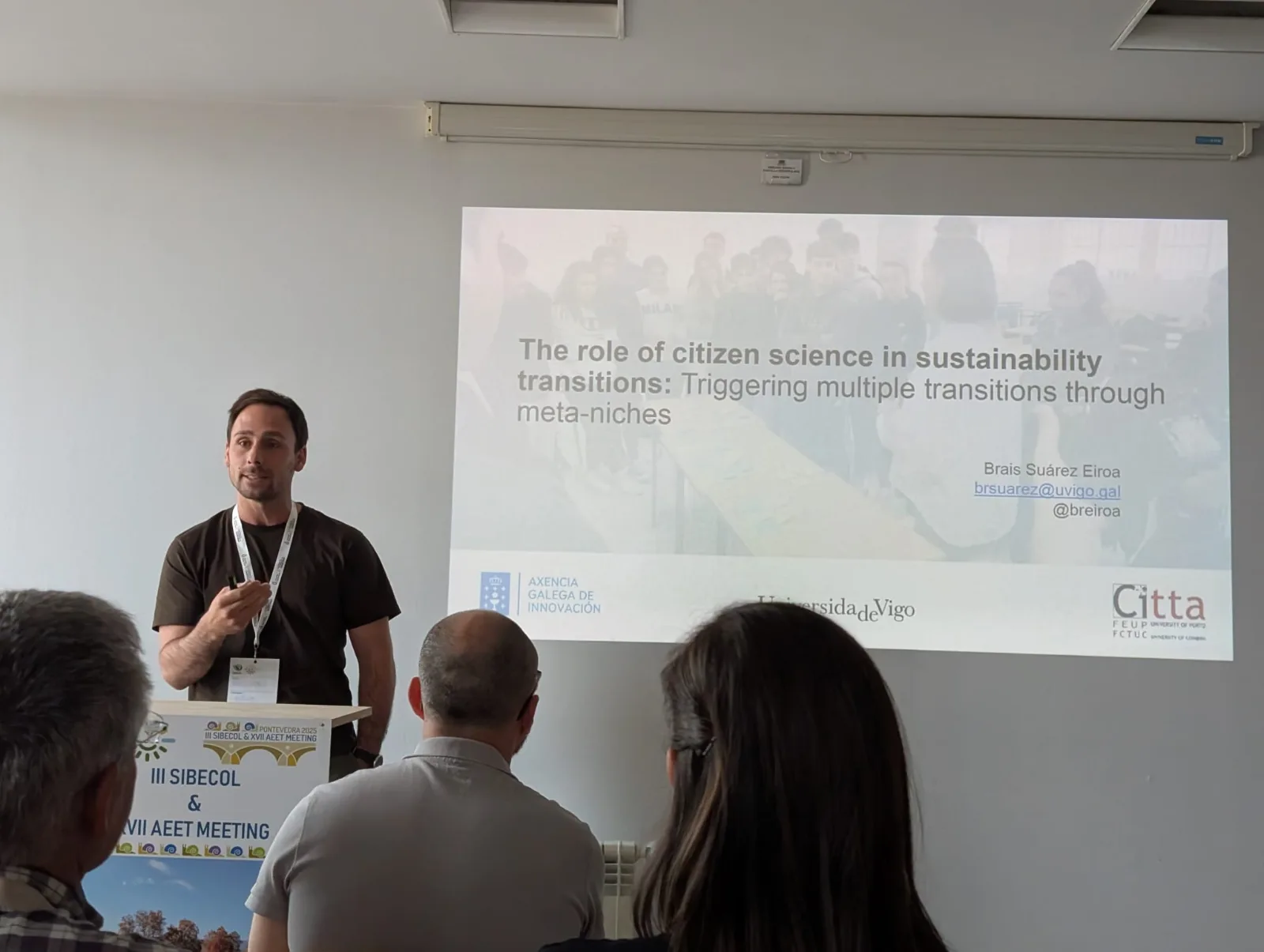
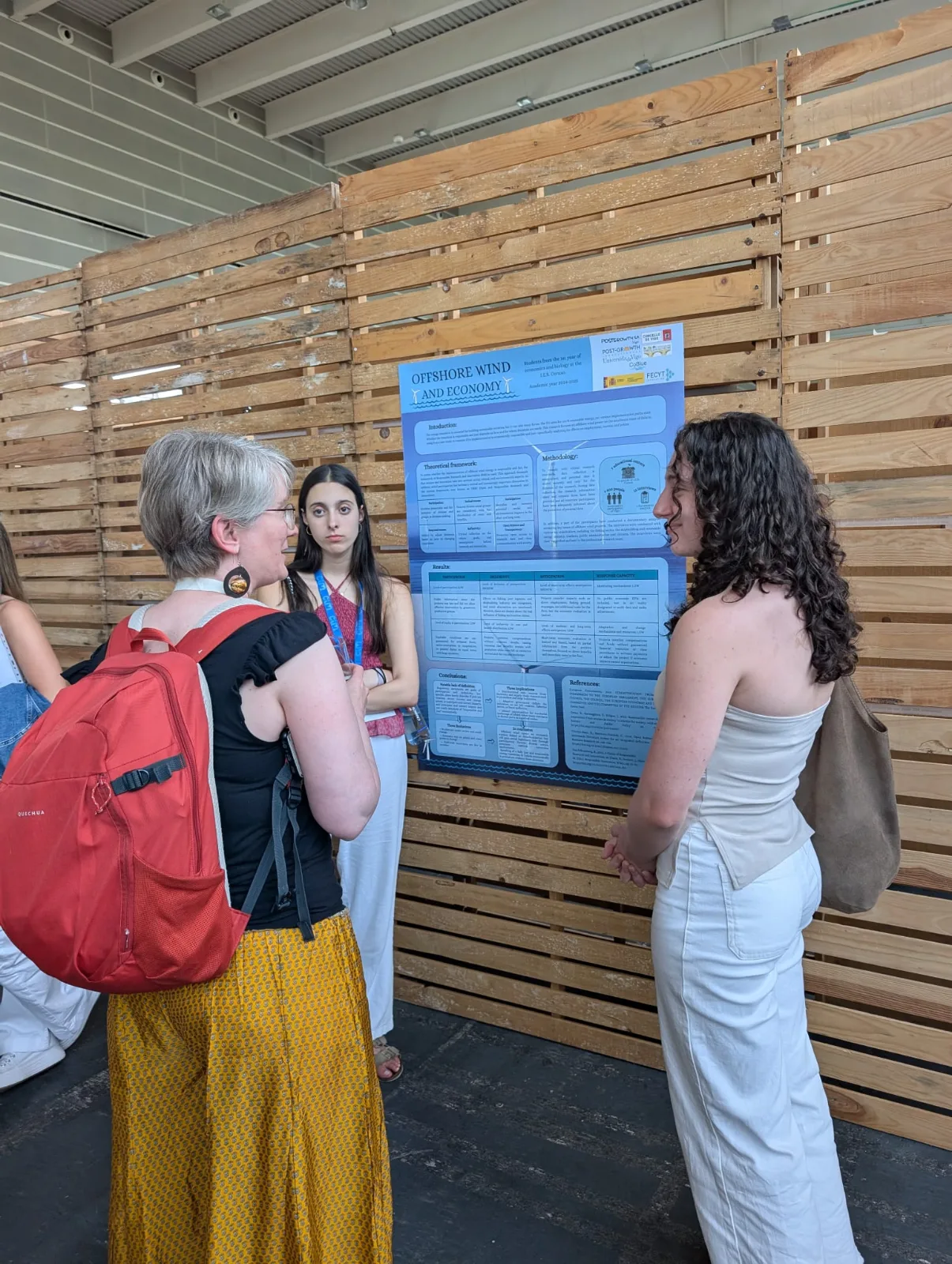
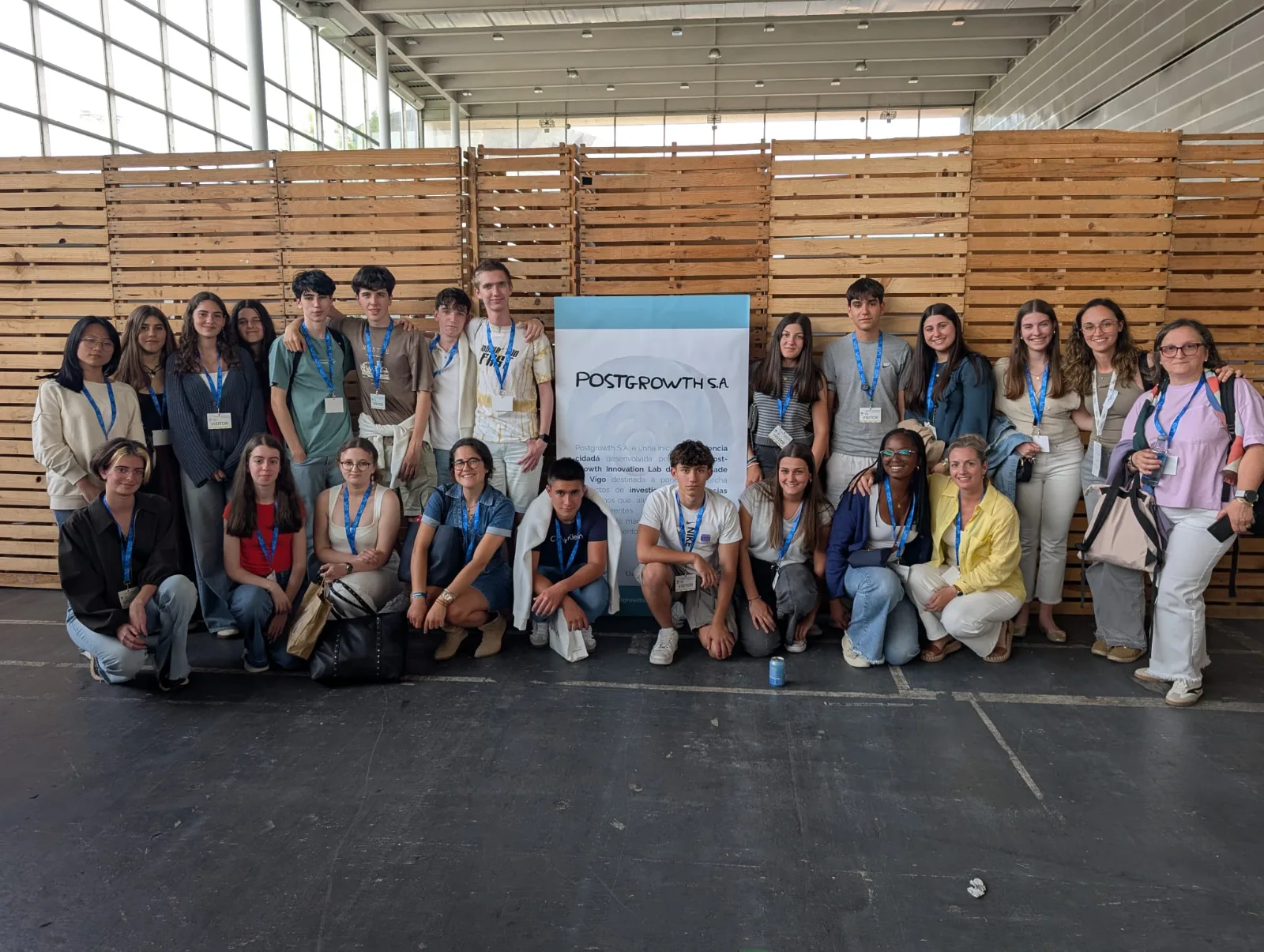
On 3 June 2025 the students presented five scientific posters, one per dimension, at the international conference III SIBECOL and XVII AEET Meeting, held in Pontevedra. The team synthesised the results into a policy agenda with ten lines of action and a social recommendations guide, sent to 24 coastal municipalities.
Context and objectives
The project set out to generate knowledge about how a just and sustainable blue economy could take shape in Vigo and its coastal surroundings. Within this framework, the research focused on a relevant and controversial issue, offshore wind and its possible deployment on the south-west coast of Galicia.
The choice of topic reflected an underlying idea: energy transitions are technological processes and also territorial, economic, ecological and political ones. For this reason, as well as asking whether a technology is renewable, it is necessary to analyse how decisions are made, who takes part, who bears the costs, who receives the benefits and which alternatives are left out.
Vigo concentrates a significant part of the maritime, fishing, port, logistics, industrial and scientific fabric of Galicia. The possible expansion of offshore wind raises questions that cut across this system, such as the impacts on fishing and shellfish harvesting, the effects on biodiversity and landscape, industrial opportunities, the distribution of benefits, the legitimacy of the energy transition and the quality of public information. Working with lower and upper secondary students brought in a generational perspective, that of those who will live in adulthood with the effects of the decisions being made today about the sea, energy and the blue economy.
The project set itself four objectives. The first two were to immerse ESO and Bachillerato students in a real process of social research and citizen science on a complex socio-ecological problem, and to generate useful knowledge about offshore wind and, more broadly, about the conditions for a just and sustainable blue economy in Vigo and its surrounding area. The other two were to document and analyse the methodological process to identify successes, limitations and improvements in school citizen science projects on specialised topics, and to connect classroom learning with spaces for public transfer, academic discussion and proposals for institutional action.
Organising, supporting and funding entities
Overall coordination was the responsibility of the Post-Growth Innovation Lab at the Universidade de Vigo, the beneficiary institution. The professional team defined the methodological framework, produced the theoretical and practical materials, ensured ethical and legal compliance, supported the schools, carried out the preliminary analysis of the data and synthesised the results for the policy agenda and the social guide. A person hired with FECYT funds ran the sessions in the schools and collected the monitoring data.
Vigo City Council was the main partner organisation and made a central contribution to the project. Teachers integrated the project into classroom routines, maintained continuity between sessions, adapted timing and pace to each group and supported students in demanding tasks such as finding informants, conducting interviews and preparing the posters. Students took part in understanding the problem, choosing the dimension, collecting data, part of the validation of results and the transfer to an academic audience, while experts from the coastal sector and members of the public took part as interviewees and survey respondents.
The support network included the Universidade de Vigo, Vigo City Council, the seven schools, earlier initiatives linked to Postgrowth S.A., the Unidade de Cultura Científica e Innovación of the university, Eco-Étika, CIDEL Galicia, research groups such as MAPAS Lab at CIM-UVigo, the conference organiser and science fair spaces. The project was funded by the Spanish Foundation for Science and Technology (FECYT) under the D.1 Citizen Science strand.
The project had a total budget of 87,500 euros. A sum of 43,000 euros was requested from FECYT and 28,000 euros was awarded. The funding was complemented by significant in-kind support, such as school and university spaces, coordination time, standard equipment, administrative support, collaboration with the scientific conference and relationship-building with schools and organisations.
Participant recruitment and selection
In July 2024 the coordination team contacted schools by email, phone and visits, and participation was open and voluntary. Recruitment combined information sent through Vigo City Council, the project email, phone calls, in-person visits and ongoing relationship-building, a combination that was essential for a technical topic with dispersed actors.
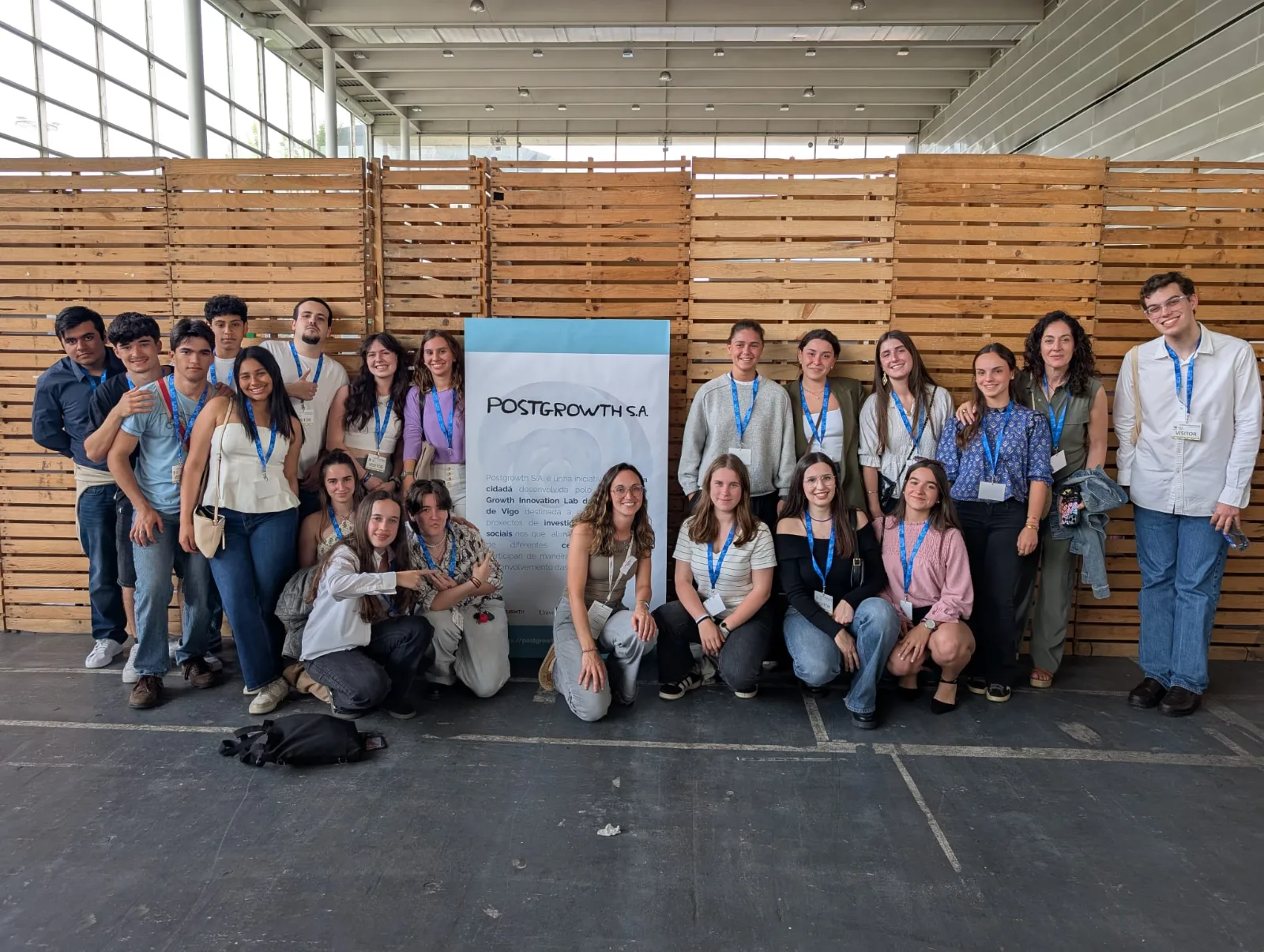
Seven schools took part, including public, state-funded private and private schools: IES O Castro, IES A Guía, IES República Oriental do Uruguai, IES Coruxo, Colegio Compañía de María, Colegio Amor de Dios and CPR Mercantil. In total 310 ESO and Bachillerato students and more than 15 teachers were involved, compared with the 8 schools and 250 students planned in the technical proposal.
The schools voted for the dimension they wanted to work on, and the team communicated the allocation seeking a balance between the number of participants, feasibility and the scope for in-depth work. IES Coruxo worked on the economic dimension, IES A Guía on ecological transition and IES República Oriental do Uruguai on open science. IES O Castro and Colegio Compañía de María worked on the social dimension, and Colegio Amor de Dios and CPR Mercantil on the ecological dimension.
Students looked for interviewees with the support of their teachers. The interviewees came from the fishing and shellfish sectors, the shipbuilding and energy industries, public administration, academia, environmental organisations, tourism, the teaching profession and the general public. Access to key informants was unequal, and in one school a rushed design session produced a sample that left out social associations, so the perspective of the most vulnerable coastal residents never entered the analysis.
The open science dimension also launched an online survey with open and closed questions, which received 341 responses. In total 101 interviews were conducted, of which 89 were included in the analysis.
Methods and tools
The project was designed as a co-creative citizen science process. The root case, the possible deployment of offshore wind on the south-west coast of Galicia, was defined by the team from the start, and co-creation consisted of opening it up to five complementary dimensions and involving students in the empirical research on each one. The approach combined semi-structured interviews, document analysis, an online survey and in-person classroom work.
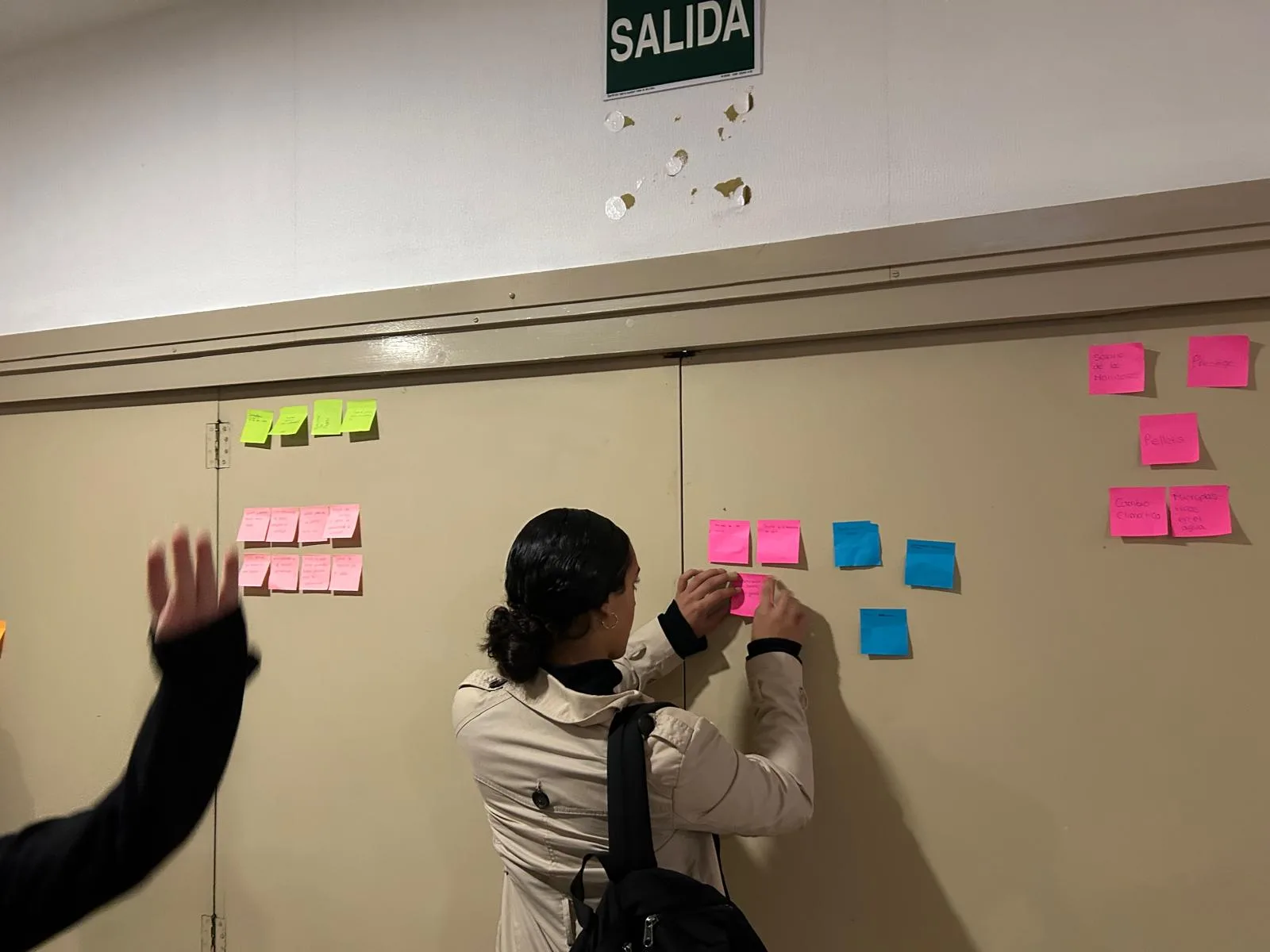
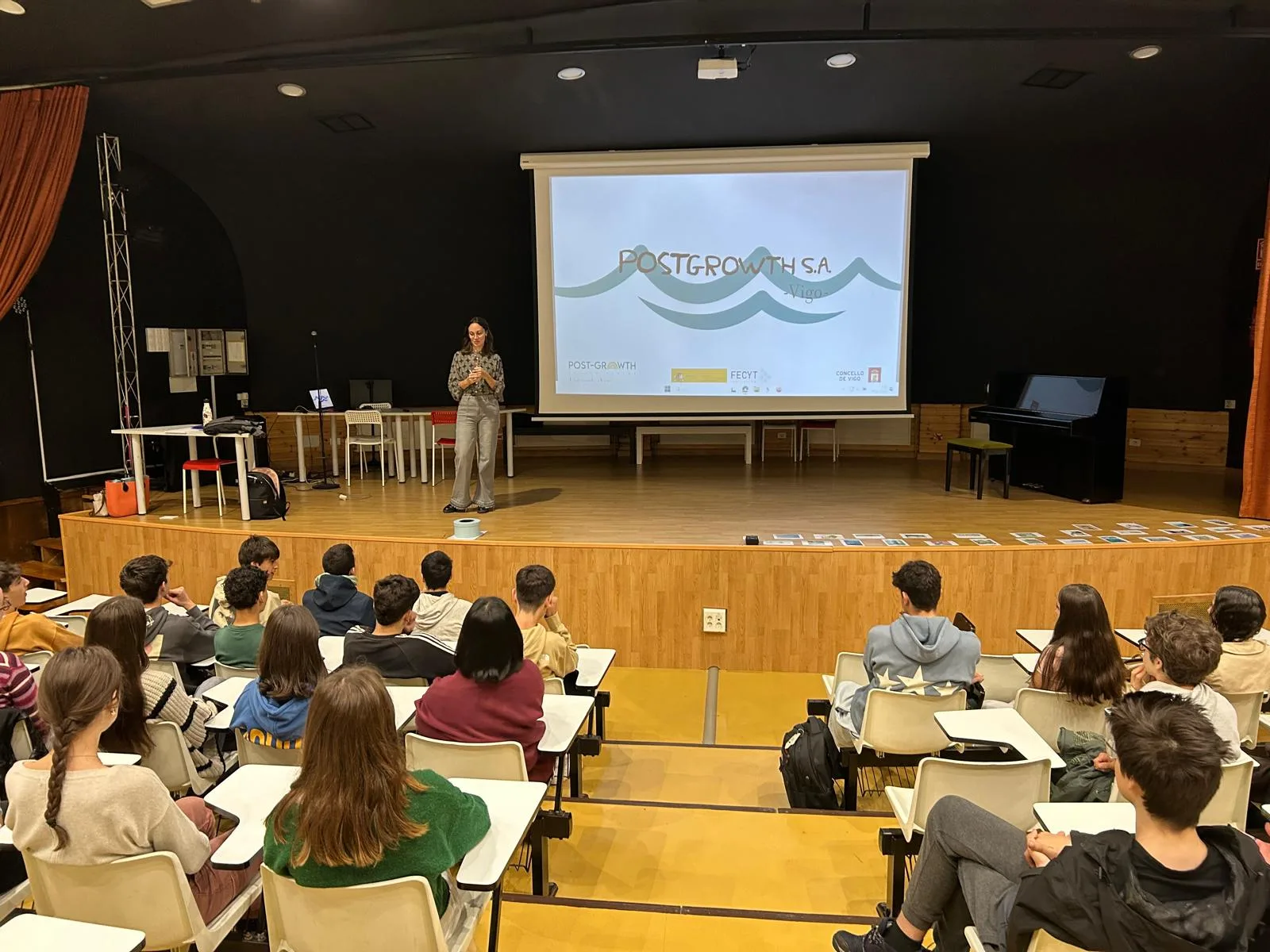
The first session, in October 2024, introduced the project and citizen science and built a first map of students' doubts and interests, which the team then organised into the five dimensions. A second session provided a common grounding in the blue economy, offshore wind and the research tools, and in the third, between January and February 2025, students adapted interview guides, informant profiles and the survey and planned the fieldwork.
Between February and April 2025 students carried out the fieldwork in small groups. In the quality control, the team coded the material with NVivo and detected interviews without audio and material invented or altered with artificial intelligence, so 12 interviews were excluded from the analysis.
In May 2025 a fourth session brought the preliminary results to the classroom to discuss, validate and refine them, and a fifth session selected the key findings and prepared the five posters. After the conference, the team compared the five dimensions and synthesised them into the policy agenda and the social guide, without a joint session among the participating groups.
The project met the requirements of the Universidade de Vigo Ethics Committee for Research with Human Beings and the Environment (CEISHMA), the General Data Protection Regulation and Spanish Organic Law 3/2018. Participation was voluntary, students with their family or guardian and each interviewee signed informed consent, interviews were anonymised and data were stored in the Universidade de Vigo institutional cloud with restricted access.
Outcomes
The research examined a single case from five dimensions that overlap and correct one another, which avoided fragmenting the problem. In ecology, with 14 interviews and document analysis, students found diagnostic effort but missing cumulative assessment, auditable adaptive protocols and restoration guarantees. In economy, with 12 interviews and document analysis, the economic dimension appeared poorly defined, with no public metrics, compensation criteria or local retention of value.
In society, 21 interviews showed that information arrives late, impacts are listed without being specified and indicators of community resilience are missing. In ecological transition, 18 interviews revealed high technical reflection and low ethical and political reflection: the debate is about how to deploy and little about what for and for whom. In open science, 24 interviews and 341 surveys pointed to low transparency, as only a minority report knowing the effects or knowing how to take part in the decisions.
The five dimensions converged on a common diagnosis. The main difficulty lies in governance, with low effective participation, little equity among actors with very different capacities, insufficient anticipation of cumulative impacts, weak correction mechanisms and transparency that is too limited to sustain informed public deliberation. In their posters, students spoke of transparency in licensing and of ensuring that the benefits stay in the affected coastal communities.
The team synthesised the results into a policy agenda with ten lines of action and a social recommendations guide for the general public. The lines cover early participation with real capacity to influence, equity in participation, cumulative impact assessment, compensation and fair distribution of benefits, open and understandable data and documents, transparency and accountability, community ownership and management, education and awareness, energy sufficiency and alternatives, and links across sectors and scales. The project also produced five results reports, one per dimension, teaching materials in five modules, manuals for each dimension, a dedicated website and certificates of participation for students and teachers.
Impacts
The evaluation combined continuous monitoring and a final review. A final survey was sent to teachers and students after the conference and at the start of the following school year, and received 46 responses, 22 in the first round and 24 in the second. As no comparable numerical ratings from this survey are available, the evaluation relied mainly on the monitoring of the process and on the quality of the material collected.
Most indicators in the technical proposal were met or exceeded. The project involved 310 students against 250 planned, more than 15 teachers, at least 15 organisations in the support network and more than 15 presentations with 5 posters at the conference. The agenda and the guide, with 10 proposals each, reached 24 municipal governments against 23 planned, 4 dissemination campaigns were carried out and social media followers exceeded 2,000 on X against 1,000 planned.
Some targets were not reached. The project involved 7 schools instead of 8, 171 people attended the conference from the schools against 300 planned, and the Citizen Science Network reached 12 secondary schools, plus other interested schools, against 15 planned.
The learning was twofold. Students gained knowledge about the blue economy, offshore wind, energy transition and marine governance, and became familiar with the tasks of real social research, such as selecting evidence, interviewing, reading technical documents, synthesising findings and communicating them in a scientific format. Researching an initially distant issue also required them to develop skills in translation, finding context, critical reading and methodological patience.
In terms of transfer, the posters at an international scientific conference gave students academic recognition, and the agenda and the guide were sent to 24 coastal municipalities. The project was covered in DUVI, Diario de Pontevedra, Valmiñor TV and Telemarinas, and took part in the III Feira da Sostibilidade at IES Luís Seoane and in the Expo-Feira A ciencia que vén ten nome de muller, where the Post-Growth Citizen Science Network of Galicia was presented.
Lessons learned
The main strengths were the coherence of the design and the combination of methods. Working on a single root case let the dimensions shed light on one another, and the transfer took the results to an international conference and to 24 coastal municipalities.
The most important weakness was the initial distance from the topic: offshore wind was not part of the everyday frame of reference of many students, and some never fully understood what they were asking. Reaching central informants was difficult, the interviews took a great deal of time and their quality was uneven, and the use of artificial intelligence to invent interviews, construct answers or script conversations amounted to a direct alteration of the data.
The role of students in the fundamental decisions was also limited. The root case was set by the team, students chose only the dimension and the cross-cutting comparison was carried out by the professional team after the conference, which reduced the co-production of the final interpretation. The report therefore recommends opening the definition of the case or its main questions to students and planning feedback with the actors involved and an evaluation with indicators comparable across editions.
Further lessons are that a distant topic must first be translated and connected with the lived territory, that a root case with several dimensions requires a designed phase of collective synthesis and that interviews should not carry the method on their own. Fieldwork quality must be controlled from the start, and artificial intelligence calls for an explicit protocol and for accepting no interview as valid without original audio and traceability.
Future work includes repeating the model with more initial training and joint analysis across dimensions, and testing techniques that lighten the load on the interview, as explored in Postgrowth S.A.: Alimentación, which replaced the interviews with a structured survey. The Post-Growth Citizen Science Network of Galicia, formalised in September 2025, provides a basis for extending the work to other blue economy issues, and the monitoring carried out feeds into a publication on the methodology of the Network and on the role of artificial intelligence in participatory processes.