
CoBlue | Offshore wind farms
A multi-stakeholder forum that brought together 36 people from 29 organisations in 2025 to co-create policy recommendations on offshore wind in Galicia.
2025
Brief description of the action
CoBlue was an Open and Responsible Research and Innovation (ORRI) action that explored how offshore wind could be developed in Galicia in a fair, transparent and environmentally responsible way. It was organised in 2025 by the CoBlue team of the Universidade de Vigo and the University of Porto within the Horizon Europe project REINFORCING, and it forms part of TIAS lab, the living lab for public participation of the Universidade de Vigo.
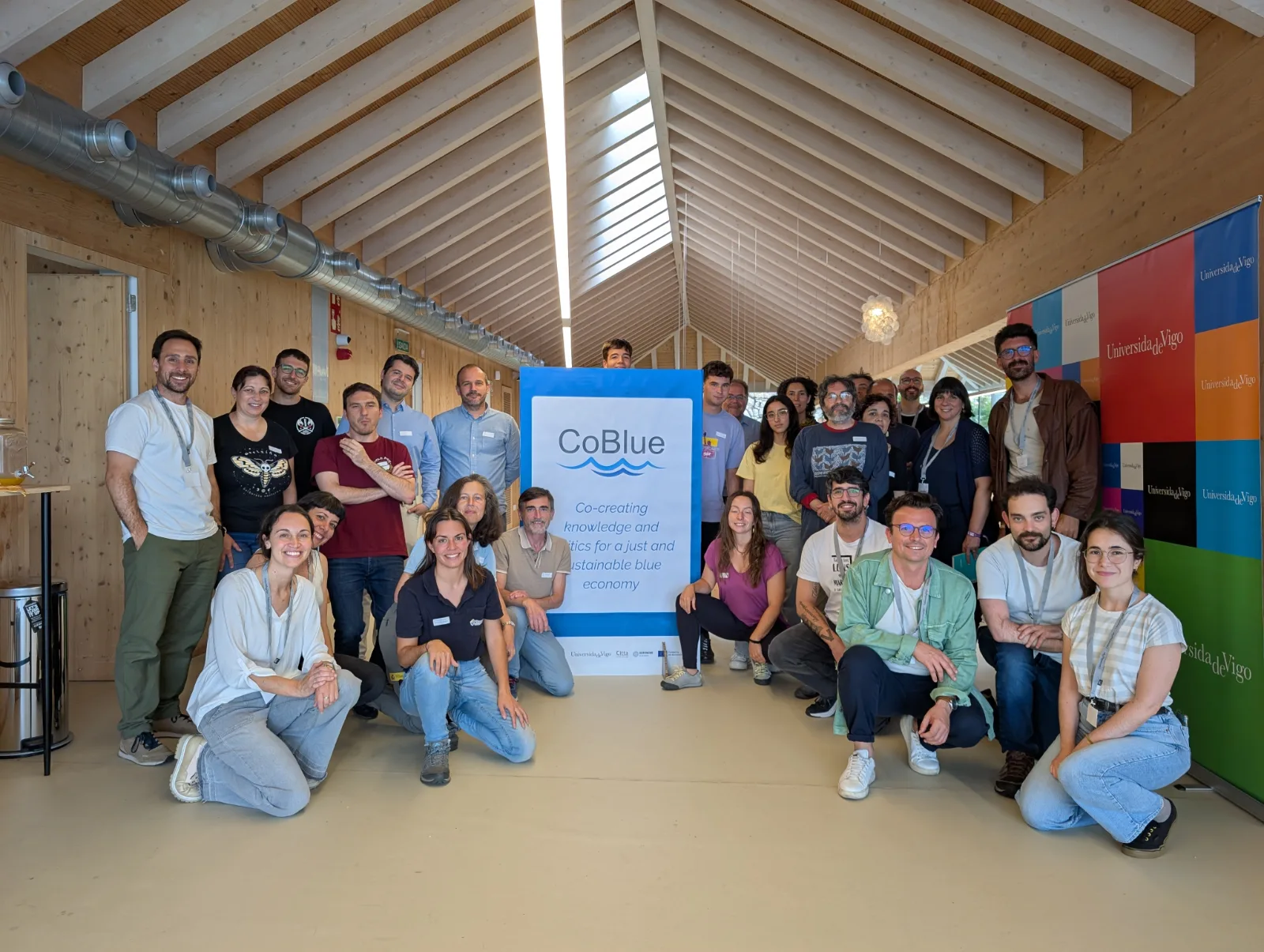
The core of the action was a multi-stakeholder forum held in the Redeiras building of the Universidade de Vigo, in the centre of Vigo. It brought together 36 people from 29 organisations in two in-person sessions, on 6 and 13 June 2025, and one online session, on 20 June 2025. Before the sessions, every participant was invited to an individual interview.
Participants came from public administration, industry, academia and research, and civil society and community organisations. Six ORRI dimensions, namely participation, inclusivity, anticipation, capacity to respond, reflexivity, and open science and transparency, gave the whole process a shared framework.
Over the three sessions, participants shared their fears and hopes about offshore wind, prioritised eight key problems and co-created solutions, four of which were developed in depth. The forum produced 13 policy recommendations, later reviewed and validated by eight organisations, as well as a methodological guide and a set of inclusivity guidelines.
Context and objectives
Offshore wind energy is a key element of European and Spanish decarbonisation strategies. In 2025 Spain did not yet have any commercial offshore wind farms, but several areas were being prepared, including the coast of Galicia. The Maritime Spatial Plan (POEM) for the North Atlantic marine demarcation, approved by Royal Decree 150/2023 of 28 February, defines the high-potential areas for offshore wind off the Galician coast.
The region has strong winds and an important fishing and maritime economy, and the sea is central to local economies, cultures and ecosystems. Decisions about offshore wind are therefore especially sensitive for local communities and for the environment.
Within REINFORCING, the CoBlue team set up an ORRI action. ORRI is an approach to research and innovation that seeks to be open, ethical, fair and environmentally responsible, and in CoBlue its principles were applied to the question of how offshore wind should be planned and managed in Galicia.
CoBlue chose a simple and practical approach based on six dimensions: participation, inclusivity, anticipation, capacity to respond, reflexivity, and open science and transparency. Together, they helped participants look at offshore wind from different angles, from who takes part and whose voices are heard to which impacts are considered and how open information is.
The main goal of the forum was to agree on concrete actions to guide future decisions on offshore wind in Galicia, such as specific measures, formal agreements or new ways of working between institutions and social actors. All proposals had to help ensure that offshore wind is developed in line with ORRI, that is, ethically, fairly, sustainably and openly with the people it affects. A second goal was to develop and test a methodology that other organisations can reuse.
Organising, supporting and funding entities
The action was led by the Post-Growth Innovation Lab of the Universidade de Vigo, together with the Research Centre for Territory, Transports and Environment (CITTA) of the University of Porto. The Post-Growth Innovation Lab designed and conducted the forum, and CITTA observed the process.
The two centres jointly produced the methodological guide and the inclusivity guidelines, and coordinated the policy brief with the thirteen recommendations. CoBlue forms part of TIAS lab, the living lab for public participation of the Universidade de Vigo, and the in-person sessions took place in a university building, the Redeiras building of the Universidade de Vigo.
The forum was funded by the European project REINFORCING, within Horizon Europe, under grant REINFORCING-I2_10, funded by the European Union. Some authors of the reports also acknowledged the support of the Xunta de Galicia Postdoctoral and Predoctoral Programmes, the latter co-financed by the European Union under the FSE+ Galicia 2021-2027 programme, and of the Universidade de Vigo Predoctoral Programme.
Public bodies and expert organisations also contributed after the forum. Eight organisations, including public administrations, a public technology company, a research foundation and the Universidade de Vigo, reviewed and validated the recommendations.
Participant recruitment and selection
The team mapped the organisations involved in, or affected by, offshore wind in Galicia and invited them by email, followed by phone calls. It paid special attention to environmental groups, fishing and coastal communities and young people, who are often under-represented in these debates.
In total, 36 people from 29 organisations took part. By type of organisation, 15% came from public administration, 22% from industry, 22% from academia and research, and 41% from civil society and community organisations. They included Concello de Baiona, Concello de Bueu, Concello de Nigrán and Concello de Tomiño, MITECO, GAIN, the Autoridade Portuaria de Vigo, research centres such as IEO and IIM-CSIC, groups such as ADEGA, Amigas da Terra and Greenpeace, GALP Ría de Pontevedra, GALP Ría de Vigo-A Guarda and representatives of adolescents.
Before the collective sessions, every participant was invited to an individual interview. The interviews helped the team understand the diversity of people in the forum and their specific needs, learn from their knowledge of offshore wind, and build a closer and more trusting relationship to support active participation. They were semi-structured, lasted between 30 and 60 minutes and took place online.
According to the inclusivity guidelines, these interviews helped the team know participants' needs, and during the sessions small groups, written contributions and voting with stickers helped to balance voices. In Session 2, an ice-breaker in pairs helped to reconnect the group and include people who had not attended the first session, and participation was sustained across the three sessions without financial incentives.
Methods and tools
The forum was designed around three principles: active and participatory, inclusive and balanced, and simple and easy to follow. Long expert lectures were avoided, activities were explained step by step with plain language and visual materials, and ten baseline rules, such as respect, active listening, a safe space, a constructive approach and balance between voices, were shared at the beginning of each session.
The in-person sessions ran from 9:30 to 15:00 in an open-plan space divided into a working area and a catering area. The team combined three roles: facilitators guided the activities, observers followed the group dynamics and note-takers recorded ideas and disagreements.
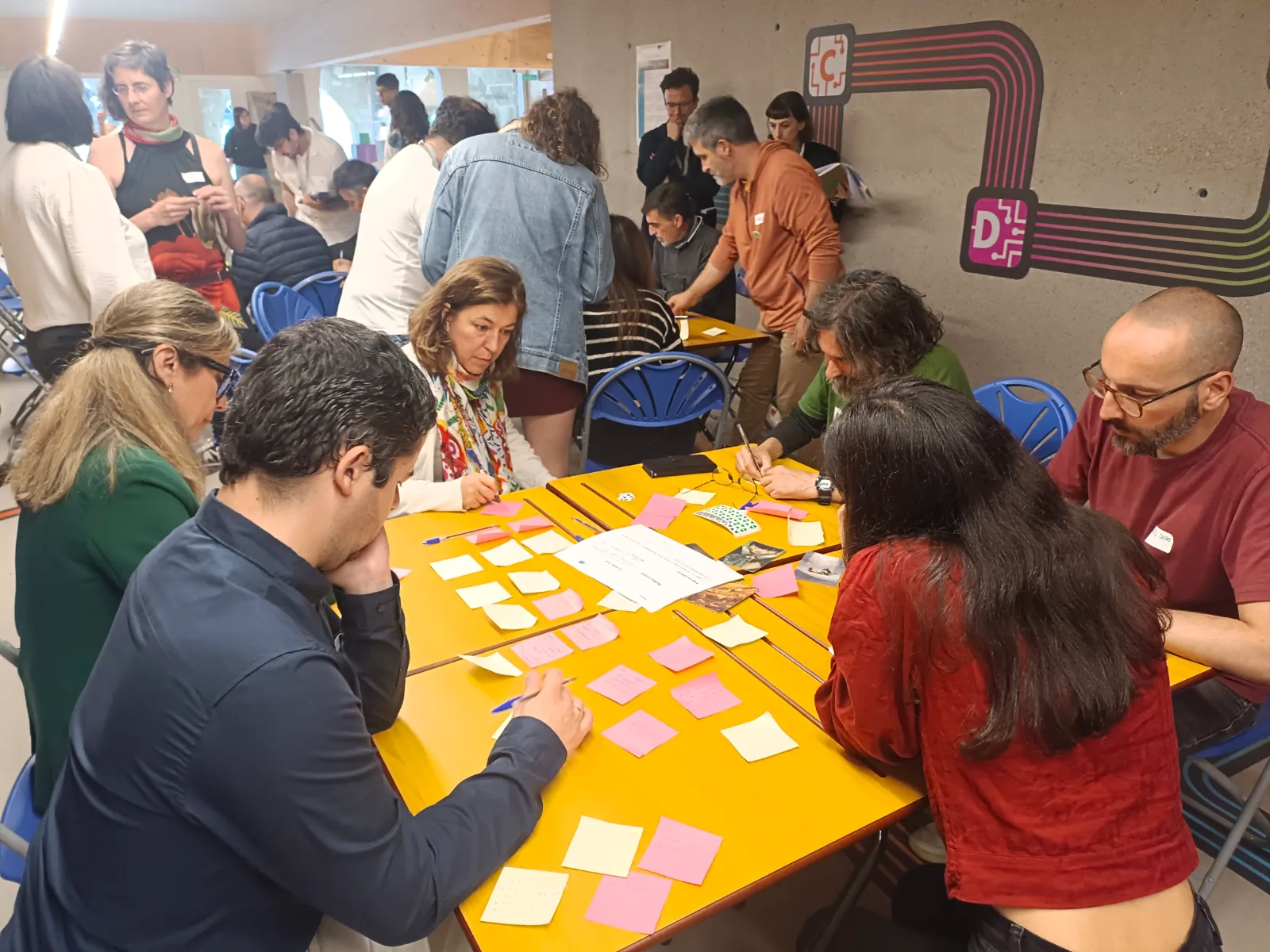
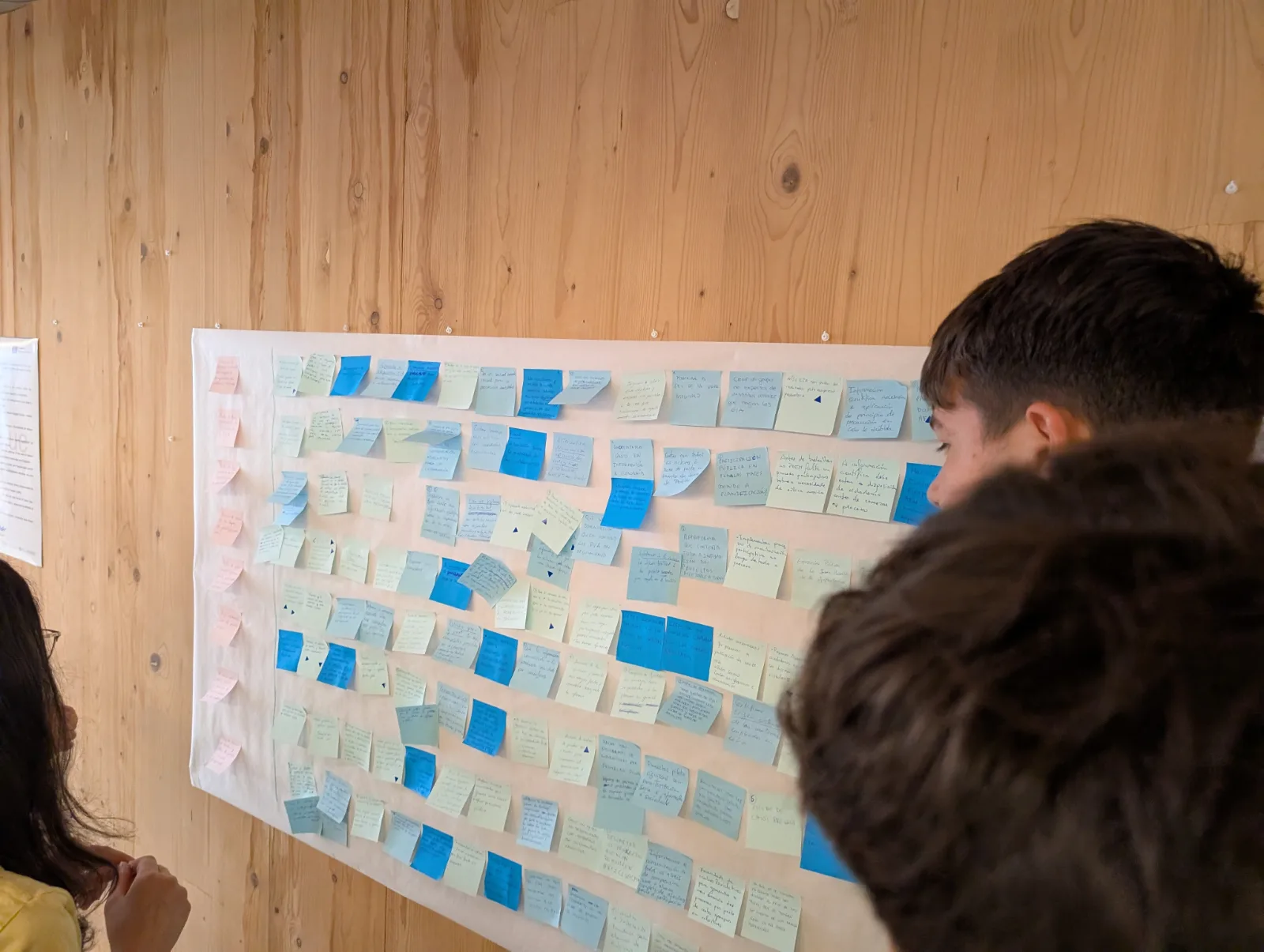
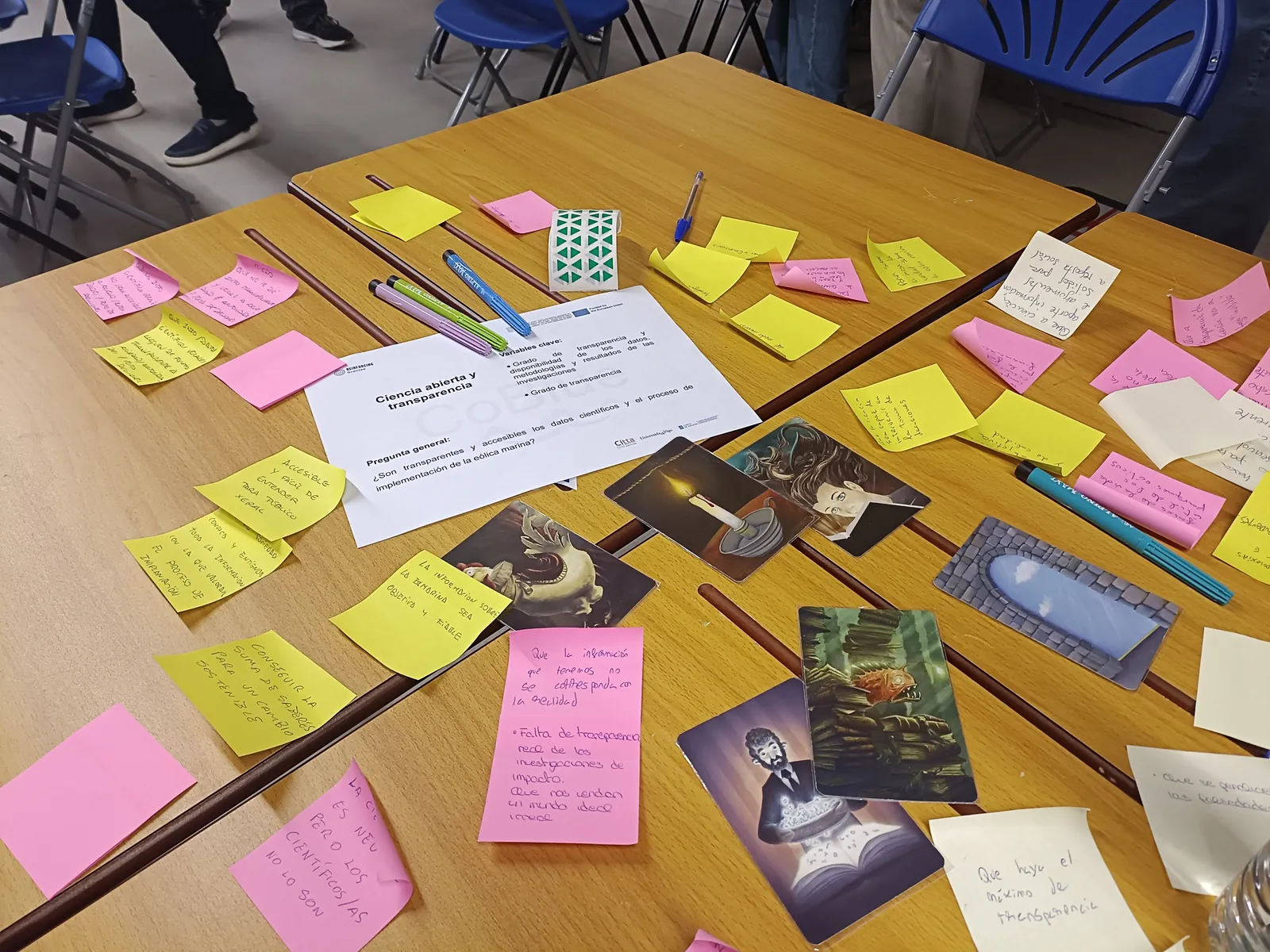
Session 1, on 6 June 2025, focused on fears, hopes and principles. Participants wrote fears and wishes about nature and society on sticky notes and voted with stickers, got to know the six ORRI dimensions in six corners of the room with Dixit cards and a speed-dating exercise, and then wrote fears and wishes about offshore wind for each dimension.
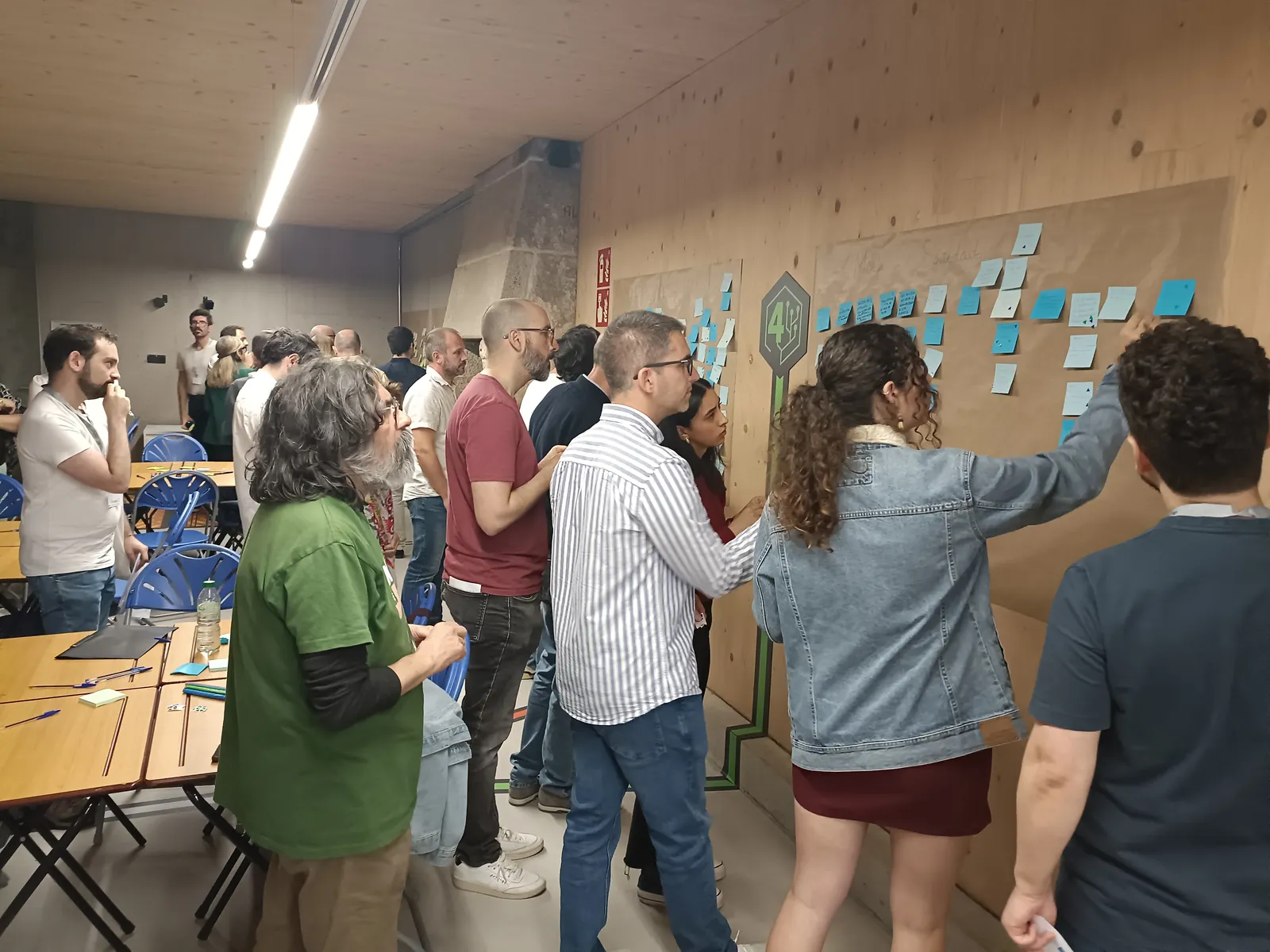
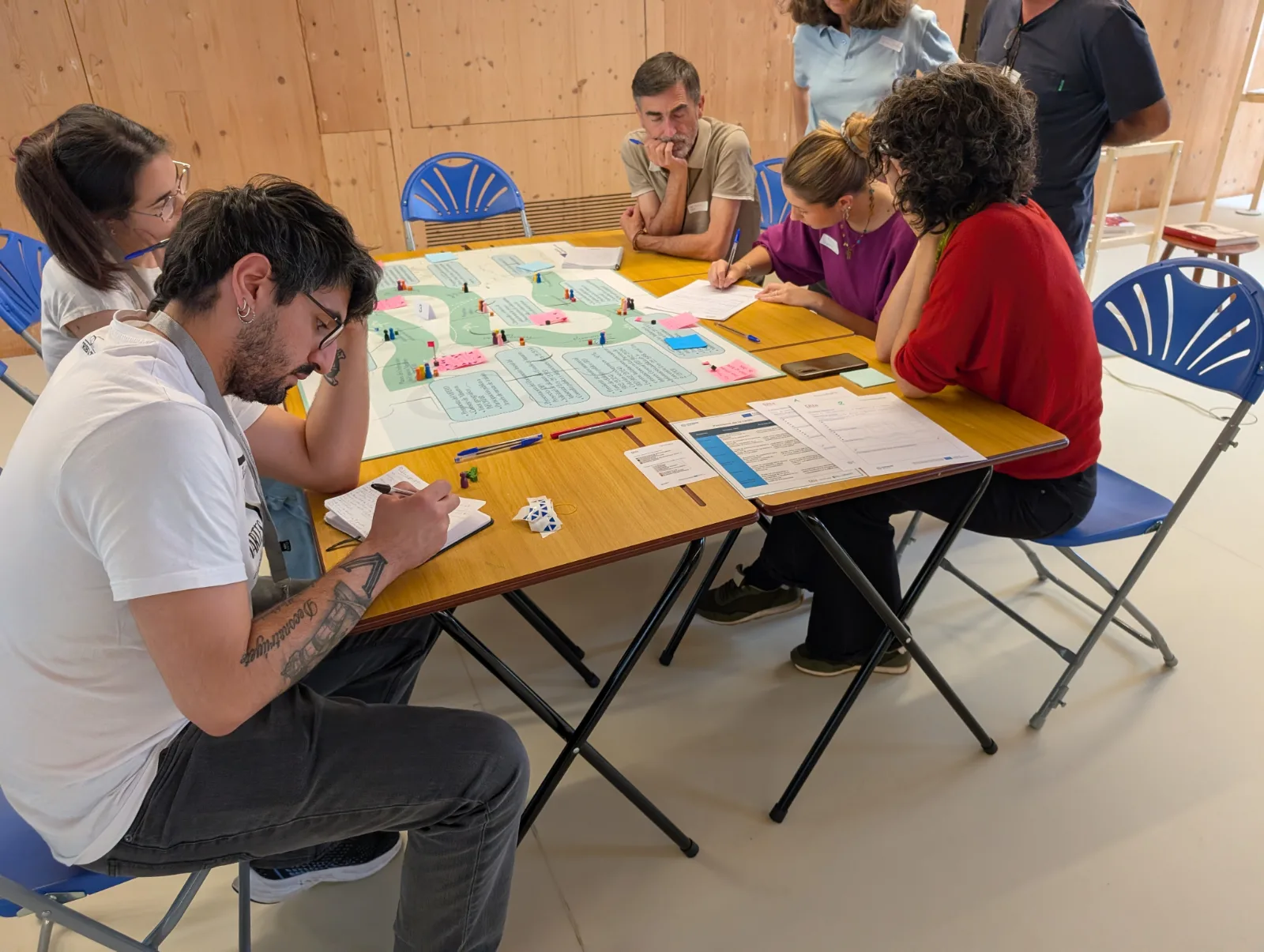
Session 2, on 13 June 2025, moved from problems to solutions. Small groups assembled a puzzle of the offshore wind implementation process, rated each ORRI dimension with traffic-light colours and identified problems, which a vote grouped into eight key problems. Participants then co-created solutions, selected the four with most support and rotated between tables to work out how to put them into practice.
Session 3, held online on 20 June 2025 from 10:00 to 12:00, validated the results. The preliminary results report was shared three days in advance, and participants commented on it on a Padlet board organised by ORRI dimension and thematic area, followed by a collective discussion that also covered the methodology.
The action met the requirements of the Universidade de Vigo Ethics Committee for Research with Human Beings and the Environment (CEISHMA), the GDPR and Spanish Organic Law 3/2018. Participation was voluntary, each participant signed an informed consent form, interviews were recorded only with authorisation and anonymised, and results are disseminated in aggregated or anonymised form.
Outcomes
The shared view of the forum was that social debate on offshore wind in Galicia is still insufficient, that decisions are perceived as imposed and that benefits are concentrated in a few actors. Participants identified structural problems such as the lack of citizen participation, weaknesses in environmental assessment, conflicts with traditional activities such as fishing and the relocation of economic benefits outside the territory. The forum also showed that the ORRI principles depend on each other: transparency requires inclusiveness, and participation depends on fair access to information.
From the problems and solutions co-created in the forum, the team drafted 13 policy recommendations addressed to public administrations and ordered along five stages of implementation: strategic plan, preparations, R&D&I, implementation and monitoring. They call for an energy plan and a blue strategy for Galicia, inter-administrative coordination and continuous participation in the Maritime Spatial Plan (POEM), outreach on the POEM and marine biodiversity, public participation in the Strategic Environmental Assessment and environmental information centralised in the InfoMAR viewer.
They also ask that the results of participatory and inclusive assemblies reach decision-making bodies, that developers create Living Labs for social dialogue, that marine monitoring include noise, biodiversity and meteo-oceanographic studies, and that a public-private collaboration framework and energy literacy be promoted. The last ones seek independent and rigorous marine environmental impact assessment, a mandatory tax or mechanism to ensure proper decommissioning and a fairer, decentralised and participatory energy model through local energy communities.
The forum also identified the minimum topics that any study on the impact of offshore wind should address, in the categories of environment, socio-economics, technology and ecological transition. Its conclusion was summed up in one sentence: “If offshore wind has to come, it cannot come at any price.”
The results were published in a policy brief, Offshore wind in Galicia in line with ORRI principles, together with a methodological guide and a set of inclusivity guidelines that analyse the process from the point of view of inclusiveness and diversity.
Impacts
The forum worked as intended. Participants engaged actively with the activities, with the ORRI framework and with each other, and participation remained high across the three sessions, including the online one. Many attended all of them even though there were no financial incentives, which suggests that the forum created a sense of relevance, trust and shared purpose.
The process did not aim to resolve all conflicts or to produce a final plan for offshore wind in Galicia. It generated shared diagnoses, specific problems in the implementation process and proposals with implementation pathways grounded in the experience of a diverse group, and the online validation led to a more robust and collectively owned set of recommendations.
Eight organisations reviewed and validated the recommendations: AECT-GNP, Concello de Nigrán, Concello de Tomiño, Fundación CETMAR, GAIN, MITECO, Tragsatec and Universidade de Vigo. The policy brief is a starting point for dialogue with public administrations, and the CoBlue team continues to work with the local and regional institutions that plan offshore wind projects in Galicia to promote the results.
According to the inclusivity guidelines, CoBlue achieved a high level of inclusiveness and diversity and, for most participants, represented a more democratic way of making decisions. Its long-term institutional uptake is still uncertain, although the dialogues held before and after the forum have strengthened its institutional embeddedness.
The six ORRI dimensions offered a clear and accessible framework that participants could relate to their own concerns and experiences without mastering ORRI terminology. The forum was not statistically representative, but it shows how ORRI principles can be translated into a concrete process for policy recommendations.
Lessons learned
Inclusive participation began well before the first session, through stakeholder mapping, personal outreach and follow-up, and the individual interviews. Groups do not automatically produce equal discussions, because differences in knowledge, confidence and power shape who speaks, so facilitation, small groups, written contributions and voting with stickers were needed to balance voices. Inclusivity has to be monitored throughout the process, including accessibility, speaking time and follow-up.
Some activities would have benefited from more time, but short and focused activities kept energy high and pushed the group to prioritise. Holding the three sessions within one month kept momentum, although the short intervals left little time for the team to analyse the material between sessions.
Starting with emotions, values and personal experience rather than technical content built the trust that sustained participation. Individual interviews, simple and transparent methods, clear links between activities and results, informal spaces and sharing the preliminary report in advance also fostered ownership, and participation needs a visible route to influence so that it is not perceived as symbolic.
The strengths included the move from emotions and values to concrete solutions, the mix of creative and analytical tools and a safe space for disagreement. Among the limitations, some technical, legal and economic aspects could not be addressed in depth, the process depended heavily on the facilitation team, and the ORRI framework may need further adaptation for other contexts or topics.
For future forums, the team recommends a clear and simple structure, enough time between sessions, investment in interviews and validation, and agreeing in advance with institutions how the results will be received. The main message of the inclusivity guidelines is that the level of inclusiveness and diversity of an engagement process should match the nature of the problem, since complex problems require high levels of both, and that these processes are worth promoting even when conditions are not ideal.