
Postgrowth S.A.: Alimentación
Citizen science action at IES Luís Seoane, within the Plataforma ODS project, on household food consumption and its emissions in Pontevedra.
2025–2026
Brief description of the action
Postgrowth S.A.: Alimentación was a citizen science action in the social sciences carried out during the 2025-2026 school year at IES Luís Seoane in Pontevedra. Its scientific aim was to understand the food consumption pattern of households in the municipality, the social and material factors that explain it and the associated greenhouse gas emissions, with the intention of detecting differences between urban, peri-urban and rural areas.
The action was coordinated by the Post-Growth Innovation Lab at the Universidade de Vigo and was carried out within the Plataforma ODS project, with financial support from the Ministry of Social Rights, Consumer Affairs and 2030 Agenda. It ran from July 2025 to June 2026, with the core participatory process between November 2025 and April 2026. Some 200 students from 14 groups in ESO, Bachillerato and vocational training (FP) took part, together with 19 teachers.
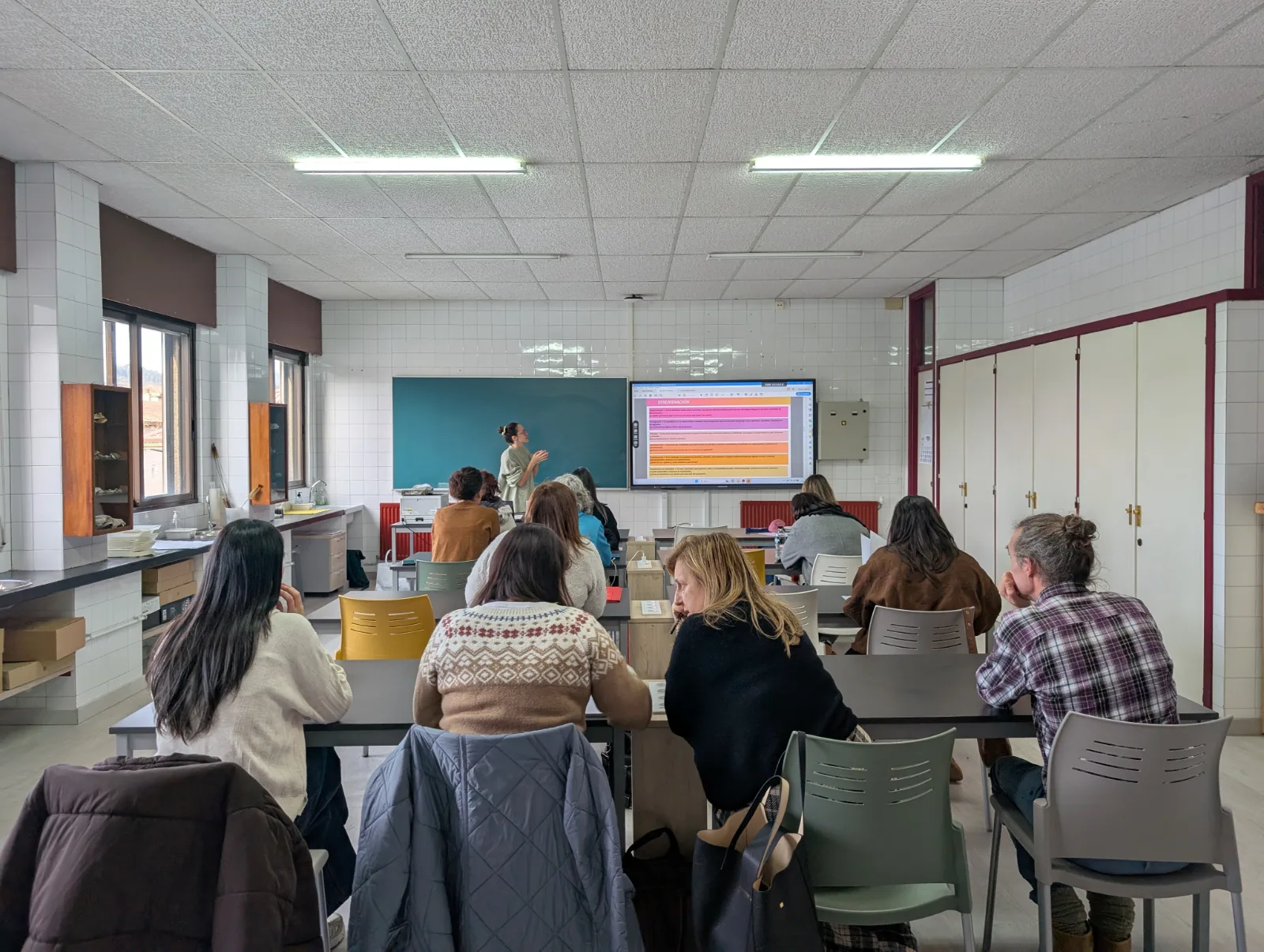
It was the third action in the Postgrowth S.A. series, after the Pontevedra (2023-2024) and Vigo (2024-2025) editions, and it introduced a change of model. Instead of the university team going into the classrooms, the team trained the teachers through a course of five sessions and 12 hours, accredited by the Centro de Formación e Recursos de Pontevedra, and the teachers themselves led the five classroom sessions with their students.
Between 17 December 2025 and 2 February 2026 the students collected 587 surveys, of which 454 had usable spending data. The results were meant to feed into the work of the Citizens' Climate Committee, and they shaped three of the four working challenges of the First Local Development Forum, held on 28 April 2026. In July the Committee delivered 12 recommendations to the City Council.
Context and objectives
Food is one of the ways in which everyday life connects with climate change: every food item that reaches a household carries the emissions from its production, processing, transport and distribution. The available estimates for Pontevedra offer a single figure for the whole municipality, and that average may hide significant differences between neighbourhoods and parishes with different ways of life. The action set out to open up that average to understand what lies behind it and where it makes sense to act in one way or another.
Pontevedra combines a compact urban centre with peri-urban and rural parishes where the family vegetable garden and ties to the village are still present. This diversity made it reasonable to assume that food consumption and its emissions are unevenly distributed across the municipality. To study it, the research grouped the parishes into six zones: one urban, three peri-urban and two urban-rural.
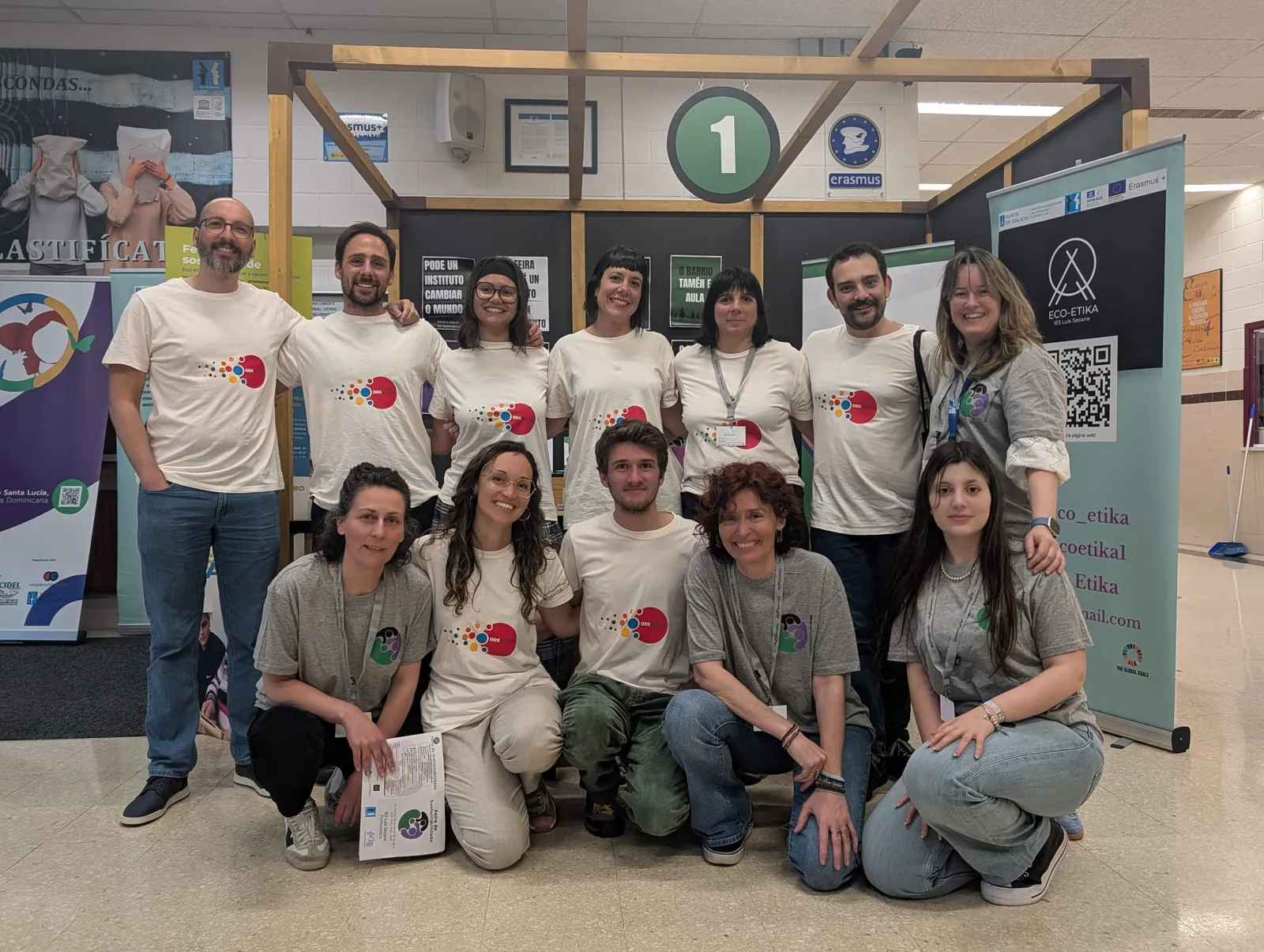
IES Luís Seoane, located in Monte Porreiro, brought a school with a well-established track record in education for sustainability. Since 2023 it has organised the Feira da Sostibilidade, whose fourth edition, from 28 to 30 April 2026, brought together 30 organisations and schools from Galicia, Spain and Europe.
At the same time, the Citizens' Climate Committee was operating within the Plataforma ODS project, a voluntary working group that seeks to develop policy proposals to meet the Sustainable Development Goals in the municipality. In its first edition the Committee worked on food consumption and climate change over five sessions devoted to the life cycle of food. The overlap in topics made it possible to connect the school research with a process of citizen deliberation that was already under way.
The action had four objectives. It sought to analyse the food consumption pattern of households in Pontevedra, its social and material determinants and the associated emissions, distinguishing between zones of the municipality; to involve students and teachers in a complete scientific process; to train teachers so that they could lead a citizen science process in the classroom on their own; and to pass the results on to the Citizens' Climate Committee so that they could feed into its proposals for local action.
Organising, supporting and funding entities
Overall coordination was the responsibility of the Post-Growth Innovation Lab at the Universidade de Vigo. The professional team designed the research and the questionnaire, prepared the sampling plan, delivered the teacher training, cleaned the data, estimated the emissions, carried out the preliminary analysis and prepared the results materials.
The action was funded through the Plataforma ODS project, with support from the Ministry of Social Rights, Consumer Affairs and 2030 Agenda. It also received significant in-kind support, such as the teachers' time, the school's facilities, the accreditation of the Centro de Formación e Recursos (CFR) de Pontevedra and the framework of the Feira da Sostibilidade. The materials were simple: an online form, mobile phones, paper questionnaires as an alternative, shared folders and presentations.
IES Luís Seoane was the participating school and the venue for the forum. The CFR de Pontevedra accredited the teacher training course, which gave formal recognition to the teachers' commitment; the course is part of the offer of the Post-Growth Citizen Science Network of Galicia, formalised in September 2025. Pontevedra City Council took part in the forum and connected the process with the local institutional context.
The Citizens' Climate Committee, which works within the Plataforma ODS project, was the recipient of the results. The Feira da Sostibilidade, organised by the school itself and also promoted by the Post-Growth Innovation Lab, provided the public space where the forum was held.
In this action the teachers had a much broader role than in earlier editions. Besides integrating the project into the classroom, they led the five sessions with their students, organised the collection of surveys and guided the interpretation and dissemination of the results, acting as a bridge between the university team and the students. The students formed the non-professional research team, and citizens took part by answering the survey and, through the Committee, by working with the results.
Participant recruitment and selection
IES Luís Seoane authorised its participation in writing before the project began. The teachers joined through the training course Ciencia cidadá dende o centro educativo, organised with the CFR de Pontevedra, and before the course the team held an initial meeting with them to present the action and agree on how to work. In total 19 teachers were trained; accreditation made participation easier, and it also attracted some teachers interested mainly in the course.
Some 200 students took part, in 14 groups that covered every year of ESO, including Year 4 of the Curricular Diversification Programme, both years of Bachillerato and several vocational training programmes in business administration, sales and marketing, and computing. Some of the 14 groups brought together more than one class. Each student signed the informed consent together with their family or guardian.
The households were to be selected through a zone-based sampling plan. The municipality was divided into six zones by grouping its 18 parishes by postcode, and a minimum of 200 surveys per zone was calculated, except in the urban-rural south, where 180 were enough, giving a total of 1,180. The survey was addressed to the person who organises the shopping in the household, because that person knows what is bought, how much and where.
In practice the students surveyed the people they could reach. To reduce bias, the design asked them to carry out each survey in its assigned zone, to seek a variety of streets and parishes and to vary days and times, and a shared spreadsheet allowed each class to plan its surveys by zone. The students collected 587 surveys: 503 were valid after cleaning and 454 had usable spending data, with the peri-urban north, which includes Monte Porreiro, as the best-covered zone.
72% of the responses came from women, consistent with the instruction to survey the person who organises the shopping, and only 7% of respondents were aged 65 or over. The most common household size is four people; 64% of households include children under 18 and 67% report a regular tie to rural areas. The results were received by the Citizens' Climate Committee, made up of 16 local residents.
Methods and tools
The design was deductive and quantitative. The professional team defined the research question, the questionnaire, the sampling plan and the hypotheses in advance, and the students adjusted the logistics of the fieldwork, collected the data, interpreted the results and communicated them. The research used a hybrid method: the citizen survey captured how households consume and why, while official statistics and economic and environmental models made it possible to convert that consumption into emissions.
The research focused on the consumption of food and non-alcoholic beverages within the household, category 1 of the European ECOICOP classification, leaving out bars and restaurants. The information was organised into three blocks: determinants (sociodemographic, material and cultural), consumption practices (where food is bought, how shopping is organised, type of products) and consumption estimates (spending on eleven food groups and total monthly spending on food). The questionnaire was designed in Microsoft Forms to take 15 to 20 minutes, and could be answered face to face, via a QR code or on paper.
The teacher training consisted of five sessions totalling 12 hours, between 17 November 2025 and 16 April 2026, each preparing the teachers for the next classroom session. Each group was scheduled to have five one-hour classroom sessions led by its teachers: citizen science in November, the research and the method with the allocation of zones in December, the results in February and the dissemination in March.
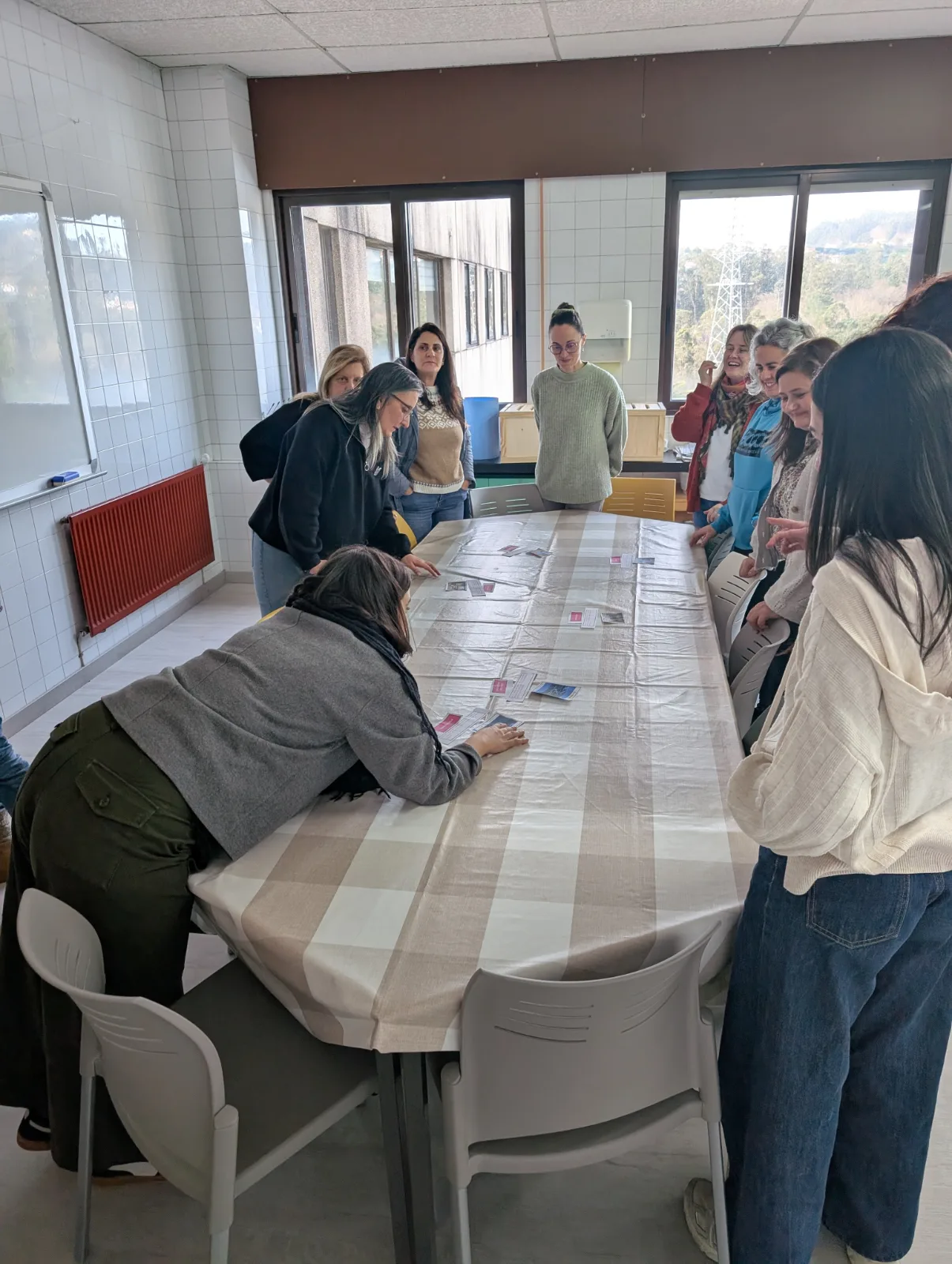
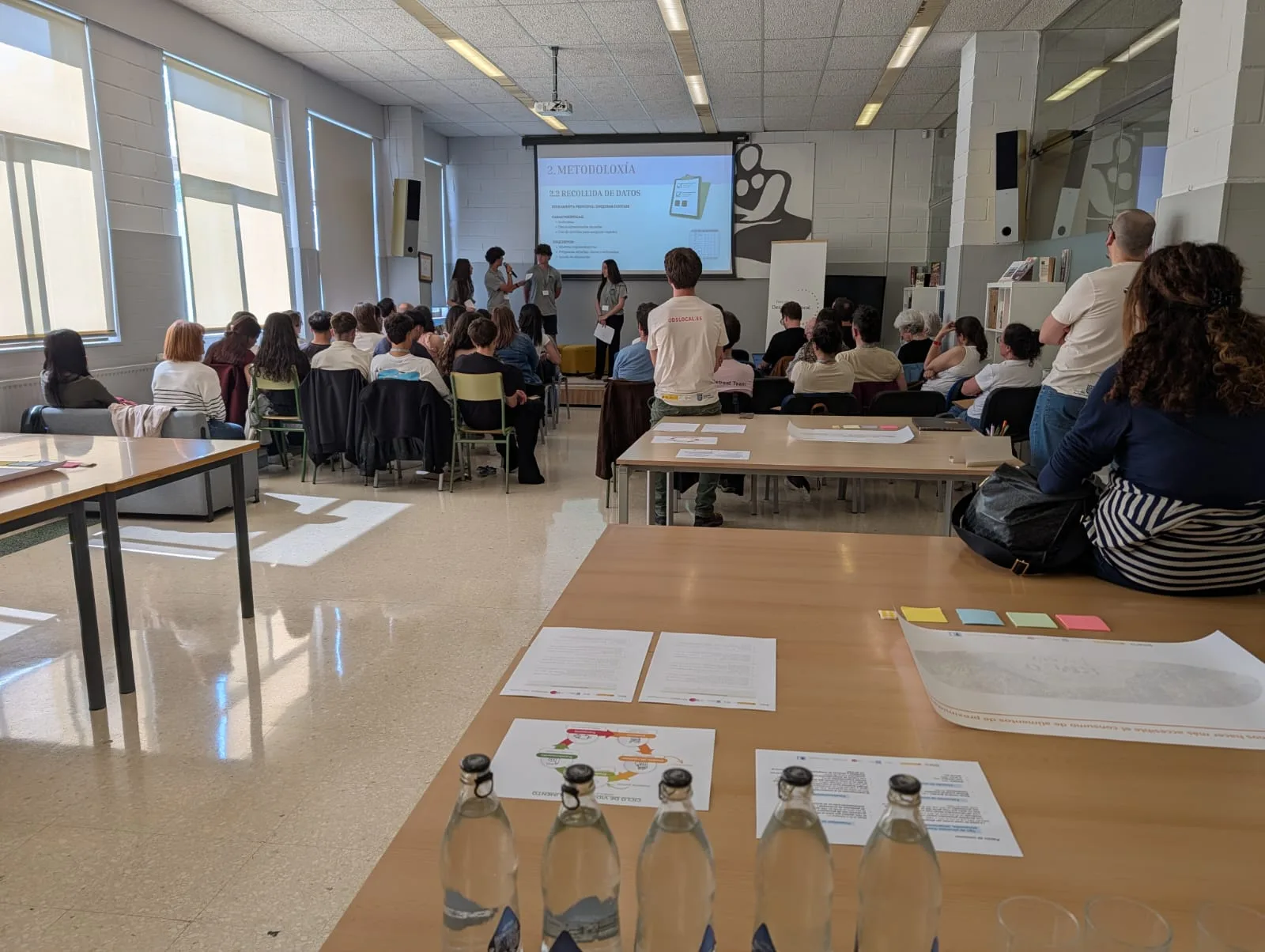
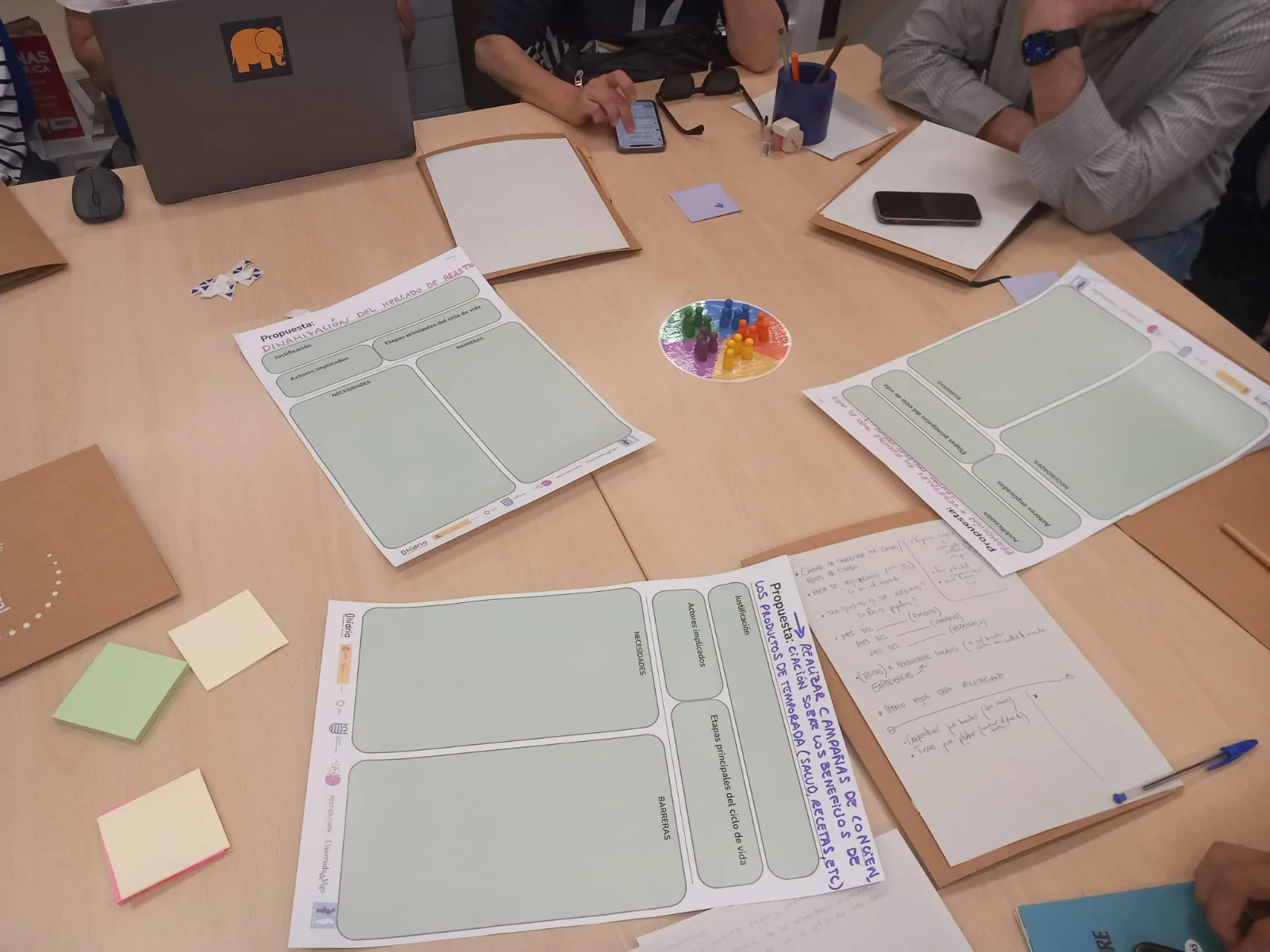
The students administered the surveys between 17 December 2025 and 2 February 2026, 79% of them in January, with a median response time of 11 minutes. In February the professional team cleaned the database, estimated the emissions and prepared a preliminary analysis. On 28 April 2026 the students presented the research at the First Local Development Forum, where the groups rotated through four stations in the activity From data to action and developed proposals in From idea to reality.
The project met the requirements of the Universidade de Vigo Ethics Committee for Research with Human Beings and the Environment (CEISHMA), the General Data Protection Regulation and Spanish Organic Law 3/2018. Participation was voluntary, the survey was anonymous and asked for explicit consent, students and teachers who worked with the surveys signed a confidentiality agreement, and data were stored in the Universidade de Vigo institutional cloud with restricted access.
Data cleaning followed four documented steps, excluding 7 responses without consent, 30 with false data, 47 outside the study area by postcode and 49 with spending that could not be converted into a figure. In total, 23% of the responses collected were discarded. The final cleaning protected the quality of the analysis, but quality control was concentrated at the end of the process and was missing during data collection.
Outcomes
The sample fell far short of the planned design. No zone reached the minimum number of surveys, and the peri-urban south, the peri-urban industrial and the urban-rural south zones ended up with 14, 3 and 2 surveys, so the analysis was carried out for the sample as a whole. The results therefore describe the 454 households surveyed and cannot be generalised to the population of Pontevedra, and the relationships found are associations, not causes.
The households surveyed report a shopping basket dominated by fresh food: 46% say that between half and three quarters of what they buy is fresh and 32% put fresh food above three quarters, while 77% report that ultra-processed food and ready meals make up less than 25%. The supermarket is the most frequently mentioned place of purchase for all food groups except bread, and self-production is mentioned by 52% of households for eggs, 37% for vegetables and 26% for fruit.
Emissions were estimated using the ARCA methodology, developed by research groups at the universities of Vigo and A Coruña. Reported spending turned out to be much lower than the INE estimate, with a median of 104 euros per person per month compared with 210 euros, giving around 77,000 tonnes of CO2 equivalent per year compared with around 137,000 according to the municipal estimate. The distribution by type of food is similar in both sources: meat, fish and seafood, and milk, cheese and eggs account for more than half of the emissions.
The analysis found weak but consistent associations. Households that place more value on fresh food, read labels more often and include older people report more fruit and vegetables, more local products and fewer processed foods, while none of the factors measured is clearly associated with meat consumption. The review of the analysis withdrew three relationships from the preliminary analysis that are not supported by the data.
The results reached the Citizens' Climate Committee at the First Local Development Forum, where three of the four challenges came from the research: increasing fruit and vegetables in everyday diets, making local food more accessible and reducing processed and ultra-processed food. The fourth, on education, came from the Committee itself, and the action did not generate its own proposals derived from the research. In July 2026 the Committee delivered 12 recommendations on food and climate change to the City Council.
The action produced a cleaned database of 454 households, an estimate of the distribution of emissions from household food consumption based on citizen data, the students' presentation at the forum and the accredited teacher training course with 19 teachers trained. It also produced a conceptualisation document, a questionnaire and a sampling plan reusable in future actions, a public page on the TIAS lab website and the methodological report with the revised analysis.
Impacts
The action did not include a systematic final evaluation with students and teachers. The assessment draws on the participation indicators, the quality of the data obtained and the observations of the coordinating team throughout the process. This absence is in itself one of the weaknesses of the action, because it leaves out the voice of those who took part.
The indicators show that the action did not achieve its main objectives. Against a planned minimum of 1,180 surveys, 587 were collected and 454 were usable; no zone reached a sufficient sample and three had fewer than 20 surveys. Reported spending came to around half of the INE estimate, so the survey is useful for understanding how consumption is distributed and leaves out its total volume.
The action reached some 200 students from fourteen groups with very little presence from the university team, including vocational training groups, which are uncommon in citizen science processes. The students had the experience of going out to ask members of the public and obtaining real data, but their role was limited: the topic seemed abstract to them, the analysis was in practice left to the professional team and only a small delegation attended the forum.
For the school, the accredited training leaves 19 teachers who know the method, a foundation on which future actions can build, although involvement was very uneven and some teachers dropped out. The forum brought students, organised citizens and the City Council together in the same room, and the Feira da Sostibilidade offered an established framework for public feedback.
The chain reached from the classroom to local government. The Committee's report on its 12 recommendations states that the City Council will analyse their feasibility and is responsible for promoting, coordinating and monitoring their implementation, and identifies the design of a monitoring system as a pending step. What was not documented is which specific conclusion of the research translated into which recommendation.
Lessons learned
The strengths worth keeping are the reach made possible by the teacher training model, the training accredited by the CFR, the anchoring of the action in existing spaces such as the Feira da Sostibilidade and the Citizens' Climate Committee, and the handling of the data.
The weaknesses worth correcting are territorial coverage, with no monitoring of zone quotas during data collection and no fallback plan; data quality, with one in four responses discarded; uneven involvement in the classroom, with no regular monitoring channel; the limited role of the students; and the connection with the Committee, where it was not documented what use was made of each conclusion.
Delegating the classroom to teachers extends reach but requires close support, so the report recommends combining teacher training with visits by the team at key moments and a fortnightly monitoring channel. Accredited training attracts teachers but does not ensure their involvement, which calls for a concrete commitment from each teacher and linking certification to completing the classroom sessions. A territorial design needs weekly quota monitoring and a fallback plan, and data quality must be monitored during collection, for example by validating postcodes in the form itself.
Asking about spending in euros does not work well: closed numerical answers, questions about frequencies or quantities, a recent shopping receipt and a pilot test are recommended. A closed, quantitative design leaves little room for students, so at least part of the design should be opened to them. Connecting citizen science with a deliberative process requires designing the link from the outset, and evaluation is part of the method, with brief micro-evaluations and a final questionnaire during class time.
The action opens several lines of continuity. The fifth Feira da Sostibilidade, scheduled for 28 to 30 April 2027, will host the Second Local Development Forum, and IES Luís Seoane, part of the Post-Growth Citizen Science Network of Galicia, is taking part in the action on rural areas in ecological transition policies in the 2026-2027 school year. The lessons from Pontevedra, Vigo and this action make it possible to compare three models of working with students, and the database of 454 households can serve for future comparisons.
The final lesson is that extending the reach of school-based citizen science is possible, and for that reach to translate into reliable knowledge it must be sustained by close support, quality control throughout the process and a real role for students in the research. This is the foundation on which the Postgrowth S.A. series will design its next actions.